Last updated November 21, 2026
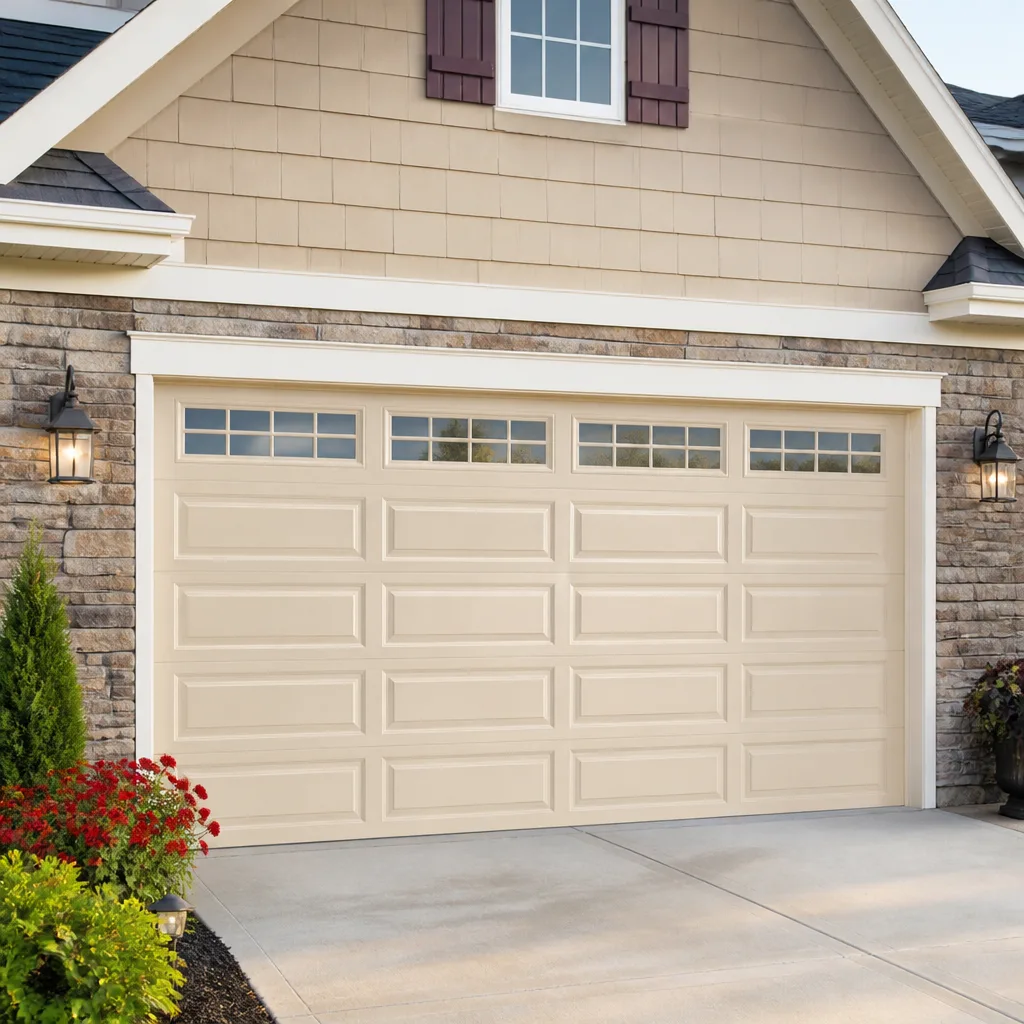 Raised-panel steel
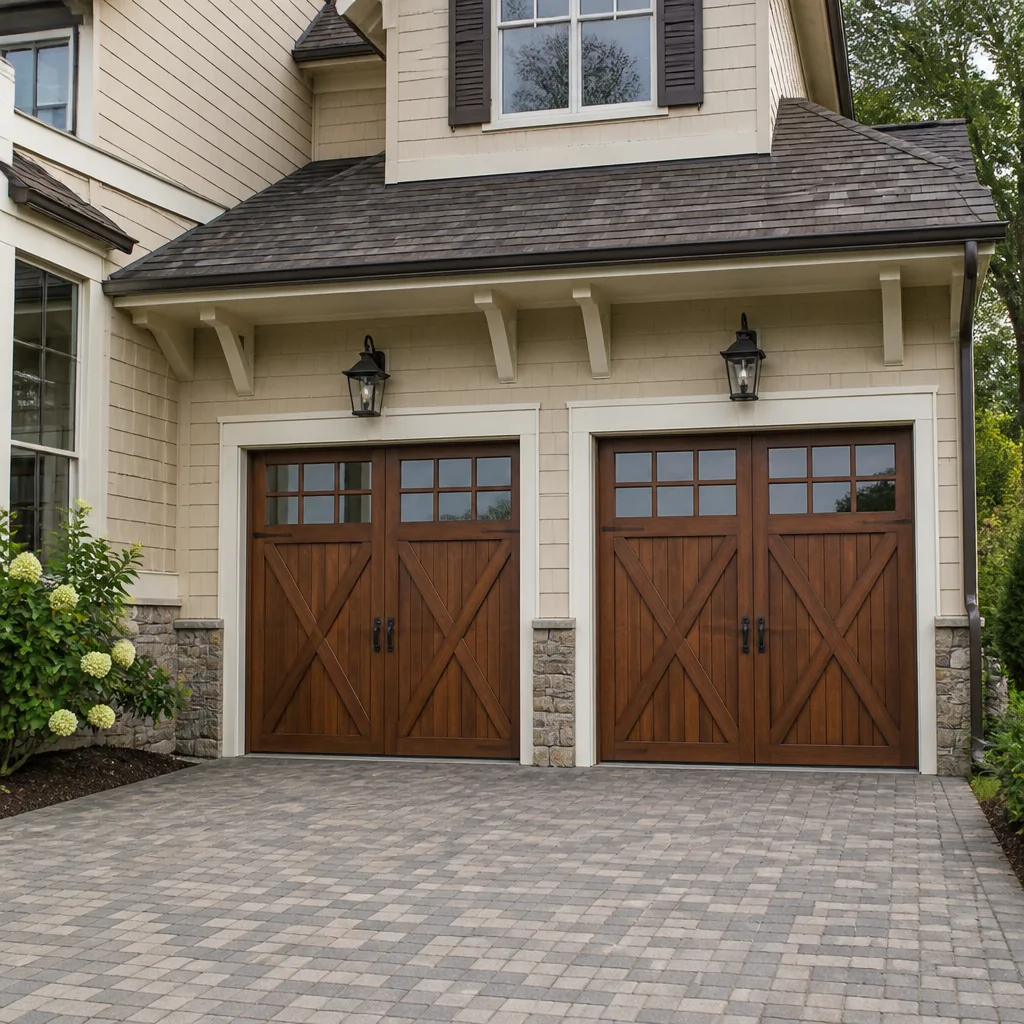 Carriage house
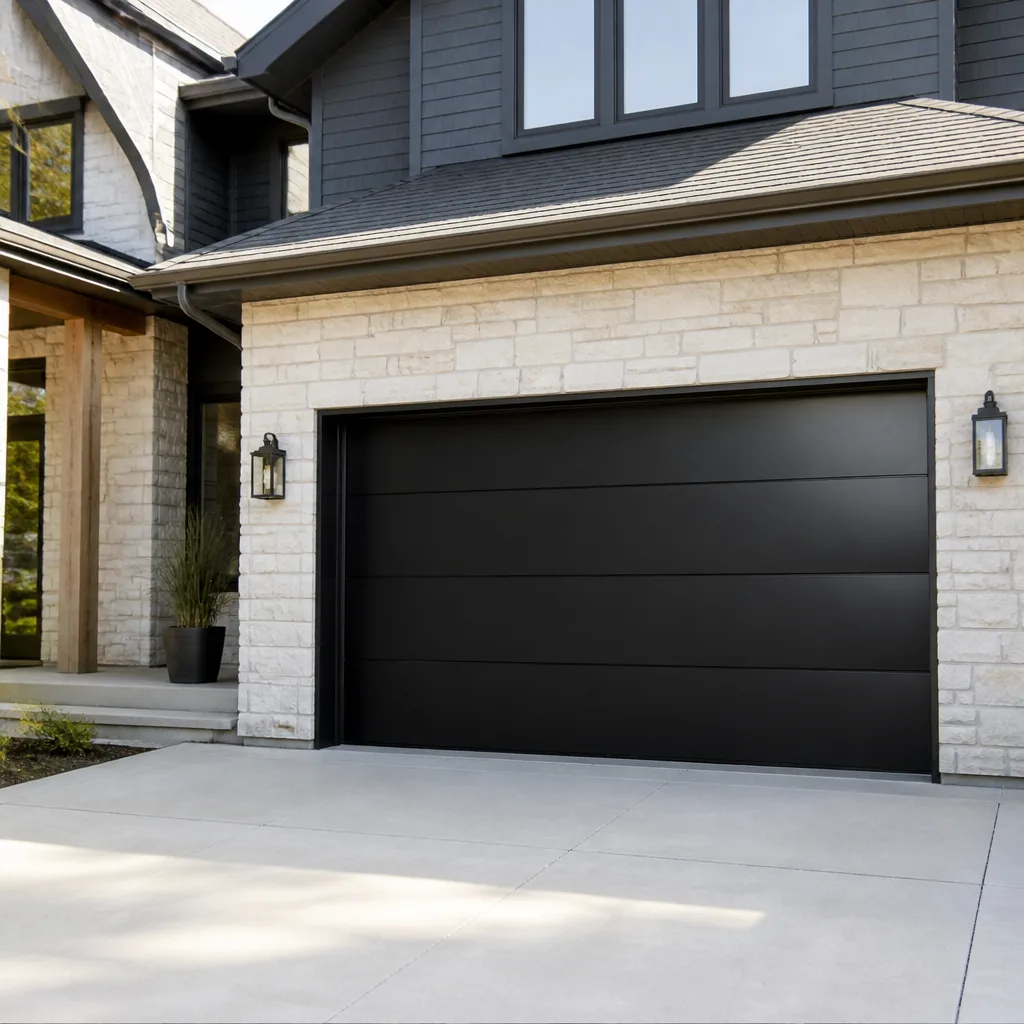 Modern flush
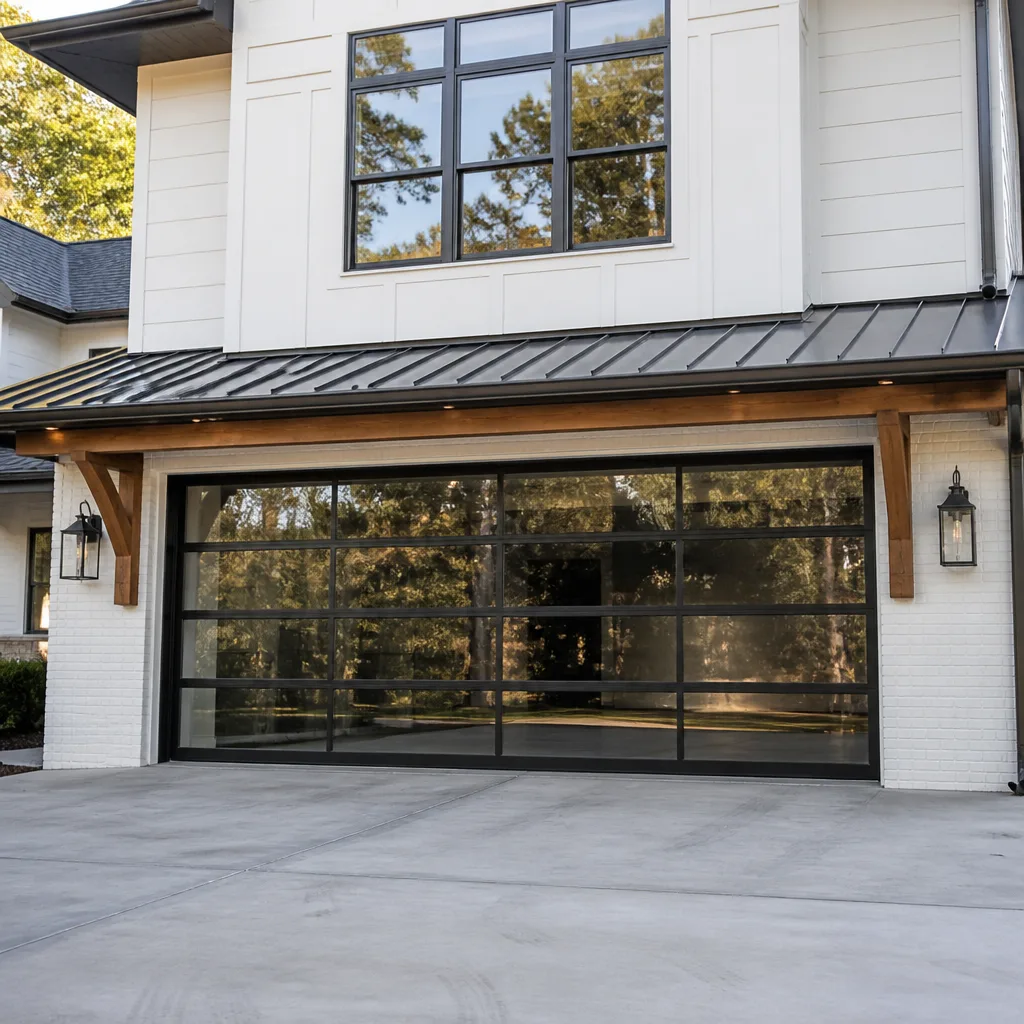 Full-view glass
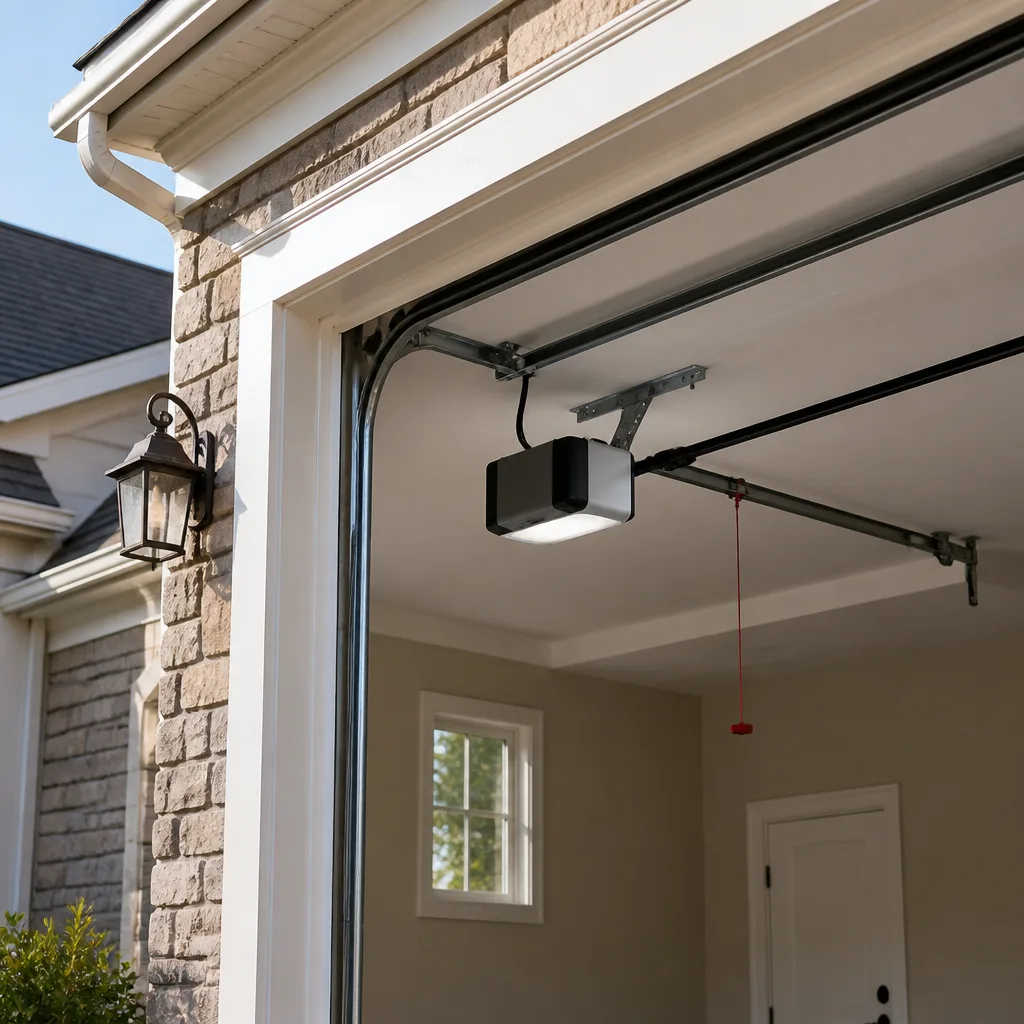 LiftMaster openers
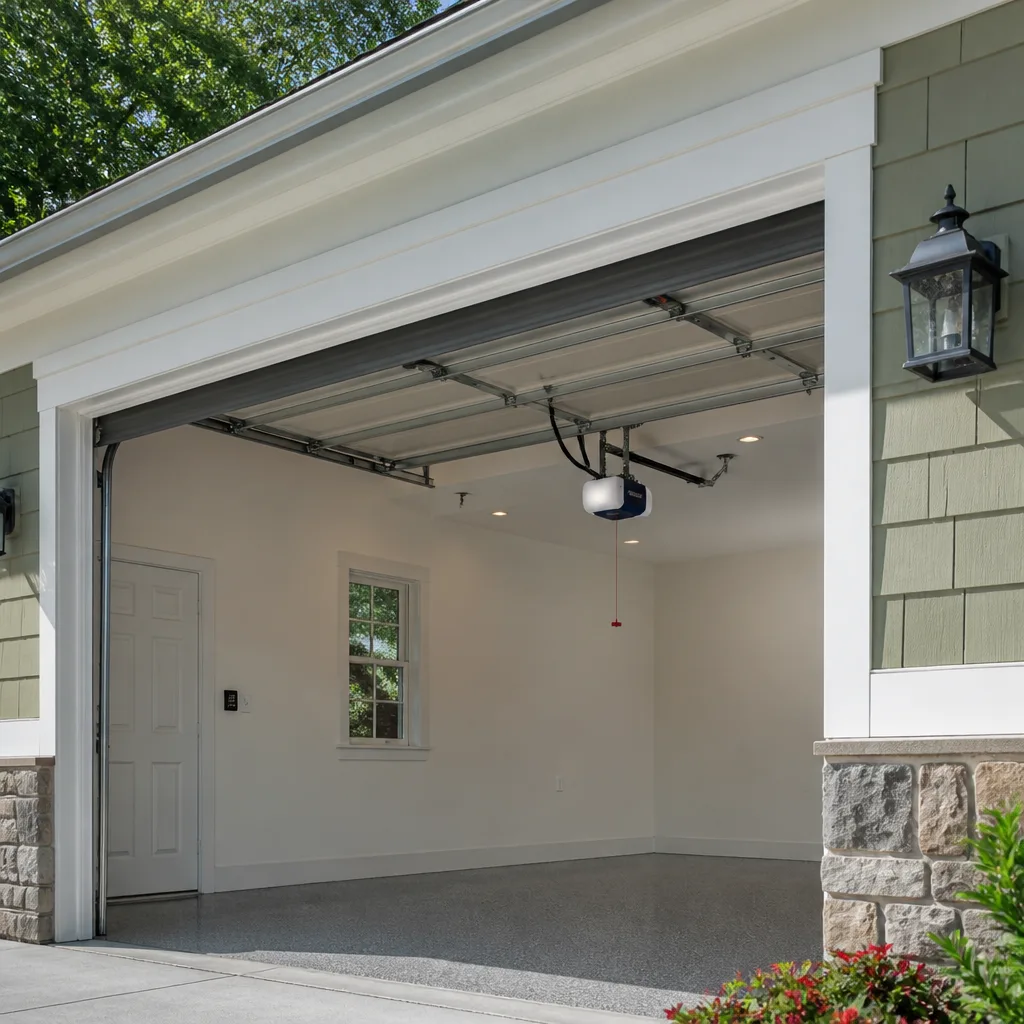 Chamberlain openers
Full 25-point door and opener safety check with every visit - springs, cables, rollers, tracks, and your LiftMaster or Chamberlain opener included
You get a price before we start. It does not change when the pro arrives.
Get your free estimateSeasonal Garage Door Care for Portage Park: Year-Round Homeowner’s Guide
Most Portage Park garage doors don’t quit in January. They quit in April. The reason is simple, and it’s the thing this guide is built around: winter cold is the loud threat, but the slow freeze-thaw grind from January through March is what actually loosens the bolts, brackets and hinges on a garage door until the first warm week when you finally start using it again and something lets go. A door that gets the same generic tune-up every year will still fall behind, because Portage Park throws four genuinely different mechanical conditions at a garage door across the calendar. What follows maps each season to the specific parts it stresses and the exact checks and adjustments that neutralize the threat. We’ll cover spring tension drift, post-winter inspection protocols, summer heat and humidity on openers and cables, fall prep, and the alley-exposure wear that front-facing suburban garages never face.
Quick Answer
Seasonal garage door maintenance in Portage Park, Chicago means matching your checks to what each season actually does to the door: post-winter inspections in spring to catch freeze-thaw damage, lubrication and weatherseal work in fall before the freeze returns, opener and cable checks in summer for heat and humidity, and a spring tension adjustment before winter sets in. A door balanced in October can be dangerously overtensioned by February, so the single most important seasonal habit is having a professional re-check spring balance and opener force settings when the seasons change. If your door is already making noise, sticking or running rough, that’s repair territory, not maintenance territory.
Styles & brands we work with
- Raised-panel steel
- Carriage house
- Modern flush
- Full-view glass
- LiftMaster openers
- Chamberlain openers
Table of Contents
- Why Portage Park Garage Doors Fail on a Different Schedule
- Winter: Cold, Spring Tension and the Overtension Problem
- Spring: The Post-Winter Inspection Protocol
- Summer: Heat, Humidity and Opener Thermal Limits
- Fall: The Pre-Winter Prep Sequence
- Alley Garage Exposure: The Wear Front-Facing Garages Never See
- The Portage Park Seasonal Maintenance Calendar
- Common Mistakes to Avoid
- When to Call a Professional
- Frequently Asked Questions
Why Portage Park Garage Doors Fail on a Different Schedule
Chicago’s four seasons don’t just change the temperature. They change the metal. Every steel panel, hinge, bracket and cable on your garage door expands in the heat and contracts in the cold, and it does that dozens of times through a Portage Park winter. Add in the humidity swings that come with a lake-influenced climate and you get a door that’s under slow, constant mechanical stress, not just sitting in a garage waiting to be used.
The conventional maintenance advice treats “cold” as the enemy and everything else as filler. That’s the wrong frame. What we’ve seen across repairs in Portage Park is that the damage gets done quietly, and the failure shows up later, usually in a season that seems unrelated to the cause. A door that finally won’t open in April is often showing the accumulated result of three months of freeze-thaw loosening that nothing was checking for.
Here’s the reality most homeowners haven’t been told:
- Spring tension is seasonal, not permanent. A torsion spring calibrated to balance a door in mild weather behaves differently when the steel is cold and contracted, and the counterbalance is no longer matched to the door’s actual weight.
- Fasteners back out. Repeated expansion and contraction works bolts and lag screws loose in a way a steady climate never does.
- Cables corrode slowly, then fail fast. Humidity in an unventilated garage is the culprit, and the failure is sudden once enough strands are compromised.
- Openers absorb the imbalance. When a door stops balancing cleanly, the opener spends the whole season fighting it, which shortens the life of the motor, gears and drive system.
- Alley-facing doors take more. Wind-driven debris, standing water at the threshold and no overhead protection accelerate every one of the above.
Maintenance in Portage Park isn’t one annual appointment. It’s four checkpoints that match what the season is actually doing to the door. The rest of this guide walks through each one and tells you what to check and when to stop and call for Garage Door Repair Portage Park.
Winter: Cold, Spring Tension and the Overtension Problem
Winter is where the misconception does the most damage. Homeowners assume the cold itself is dangerous, so they don’t touch the door and don’t think about it until something breaks. The real risk is subtler: a door that was perfectly balanced when the weather was mild can be dangerously out of balance by February, because the steel has contracted, the lubricant has thickened and the torsion spring’s effective tension no longer matches the load it’s holding.
How cold changes spring calibration
A torsion spring is selected and wound to counterbalance the exact weight of your door. When the door panels and frame contract in sub-zero temperatures, the door’s effective weight and the friction throughout the track and hinges both change. A balanced door suddenly feels heavier on the opener and lighter in the hand, or vice versa. The spring hasn’t moved. The relationship between spring and door has.
This matters because a door that’s overtensioned in the cold is storing more energy than it should. It also throws off the opener’s force calibration, which is set to a specific resistance. The opener strains through every cycle because it’s now lifting a load it wasn’t set for. That strain is what quietly ages motors and drive systems through the winter.
What to watch for in the cold months
- Sluggish operation. If the door moves slower or the opener sounds like it’s laboring, the spring balance has drifted.
- Uneven travel. One side rising faster than the other means the springs are no longer matched or the cables have stretched differently.
- New noises. Groaning, grinding or popping in the cold is usually dried-out, thickening lubricant or loosened hardware, not normal cold-weather behavior.
- The door won’t stay up when opened manually. This is a balance problem, and it’s a safety issue, not an annoyance.
What not to do
Do not try to adjust, wind or unwind a torsion spring yourself in the winter. Garage door springs are under extreme stored tension, and the failure of a spring or its hardware can cause serious injury. This is dedicated safety work, and it needs a trained technician using proper winding bars and knowing exactly how much tension to reset. If the door feels out of balance, that’s a garage door repair call, and it should happen before the door is used heavily again.
The practical winter rule in Portage Park: keep the door moving, listen for changes and have the balance checked before the deep freeze sets in, not after.
Spring: The Post-Winter Inspection Protocol
Spring is when most Portage Park garage doors finally fail, and the cause is the three months that came before it. Freeze-thaw cycling has been working every bolt, bracket and hinge loose since January, and the first sustained warm spell is when the door gets used heavily again and the accumulated looseness shows up all at once. The post-winter inspection is the most important maintenance checkpoint of the year, and it’s the one most homeowners skip.
The post-winter inspection protocol
- Walk the full door and frame. Look for loose hinges, worn rollers, bent track sections and any hardware that has visibly backed out. Remember that the door gets heavy use after a cold season, so anything that moved needs attention now.
- Check the weatherseal. The bottom seal and the perimeter seals take the brunt of freeze-thaw. Cracked or flattened seals let water in and force the door to work against resistance.
- Test the balance. Disconnect the opener and lift the door halfway by hand. It should hold its position. If it drops or rises on its own, the springs need professional attention.
- Inspect the cables and drums. Look for fraying, rust or slack on the cables. This is a visual check only; cable work is safety work.
- Test the safety reverse. Place a solid object in the door’s path and confirm the door reverses on contact. Also test the photo-eye system by blocking the beam.
- Lubricate the moving parts. Hinges, rollers, tracks and the spring, using a proper garage door lubricant, not household oil or grease.
- Run the opener through several full cycles. Listen for strain, watch the travel for evenness and check the force settings.
If nothing in that list turns up a problem, you’re ahead of most Portage Park doors. If any of it does, don’t wait. A loose bracket or a fraying cable that gets ignored in April is a spring or cable failure by summer. And if the door needs parts, the last thing you want is a cycle of handyman visits while the door sits unusable; the goal is to get the part and skip the wait. Your garage door opener repair should be scheduled at the same time if the opener has been working harder than it should through the winter.
Why spring failures cluster in April and May
There’s a reason spring failures aren’t evenly spread through the year in this neighborhood. The door sat cold and contracted for months, the opener forced it through every cycle against an imbalance, and the first warm week brings heavy use. That’s the worst possible combination for a spring that’s been carrying a load it wasn’t calibrated for. The inspection protocol is designed to catch the imbalance before the heavy-use week, not after the snap.
Summer: Heat, Humidity and Opener Thermal Limits
Summer feels like the easy season for a garage door, and that’s exactly the trap. Heat and humidity stress the system in ways that don’t announce themselves the way a frozen spring does, and the damage is cumulative and invisible until a part fails.
Heat and opener motor thermal limits
Garage door openers are rated for a certain duty cycle, and a hot, unventilated garage pushes the motor toward that limit faster than cool weather does. When the opener is already fighting a door that’s slightly out of balance from a winter that went unchecked, the motor runs hotter on every cycle. The thermal protection may kick in and stop the opener mid-cycle, or the motor may simply age faster. Either way, the fix isn’t a bigger opener; it’s correcting the balance so the opener stops working so hard.
Modern openers, including the smart-home-integrated units from LiftMaster, Chamberlain and Genie that more Portage Park homeowners have upgraded to, run diagnostics that reveal how hard the motor is working. Those diagnostics are worth checking in summer, because the app will often tell you the door is straining before you’d ever hear it.
Humidity and galvanized cables
Inside an unventilated garage, summer humidity has nowhere to go. Galvanized lift cables are built to resist corrosion, but “resist” isn’t “ignore.” Through a humid Chicago summer, the moisture that collects on the cables, drums and springs begins to break down the zinc coating, and once corrosion gets a foothold the cable weakens under load. The failure is sudden, and it’s dangerous. Corroded cables are a professional inspection matter, not a homeowner fix.
Summer checks worth doing
- Ventilate the garage. A door cracked open for airflow reduces heat and humidity buildup and helps the opener and cables both.
- Look for rust on cables and springs. Any visible corrosion on a lift cable means it’s time for an inspection.
- Test the opener’s force and travel. High heat can shift the door’s operation; the opener should still reverse cleanly and travel evenly.
- Clear the tracks. Summer debris, dust and grit work their way into the tracks and add resistance the opener has to fight.
- Check the photo-eye alignment. Direct summer sun can interfere with some photo-eye setups; confirm the door reverses reliably.
Summer isn’t the season to leave the door alone. It’s the season to make sure the opener and cables aren’t quietly cooking and corroding while the weather seems fine.
Fall: The Pre-Winter Prep Sequence
Fall is the single most valuable maintenance window of the year in Portage Park, because everything you get right now is risk removed from the whole winter ahead. The freeze-thaw cycle is coming, and the door needs to be balanced, sealed and lubricated before the first hard freeze, not after. This is the sequence that does the most good, in order.
The pre-winter prep sequence
- Replace the weatherseal. The bottom seal and perimeter seals are the door’s first defense against cold air, melting snow and water. Install fresh seals before the freeze, while the door still moves freely and the seal can seat properly.
- Lubricate with cold-rated grease. Standard lubricant thickens in sub-zero temperatures and turns into resistance the opener has to overcome. Use a cold-rated garage door lubricant on hinges, rollers, tracks and springs so the door moves easily through the coldest weeks.
- Have the spring tension checked and reset. This is the critical step. A door balanced in warm weather can be overtensioned once the steel contracts; having a technician reset the balance before winter locks in is what protects both the spring and the opener.
- Adjust the opener force. Once the spring is balanced, the opener’s force settings should be set to match the corrected door. This is what stops the opener from straining all winter.
- Tighten every fastener. All of the brackets, hinges and lag screws that the freeze-thaw season loosened get tightened now, so the next cycle starts from a solid platform.
- Test all safety features. Reverse, photo-eyes and manual release all get tested so the door is safe to use in the cold when you need it most.
- Inspect the tracks and rollers. Straighten bent track and replace worn rollers now; a track that binds in cold weather can stop the door entirely.
Doing this in fall is not overkill. It’s the difference between a door that runs all winter and a door that ends up as an emergency call in the middle of a frozen February. If you’re replacing a door that’s beyond maintenance this season, that’s a different job; a new door from Clopay or Amarr, properly installed, changes the whole maintenance calculus, and garage door installation is the fix when repair no longer makes sense. For most Portage Park doors, though, the fall prep sequence keeps a working system working.
Alley Garage Exposure: The Wear Front-Facing Garages Never See
Portage Park’s housing stock includes a huge number of alley-facing garages, and that single detail changes the maintenance equation. A suburban garage facing a driveway, under the protection of a house and a roof line, is a different environment from a garage that opens onto an unshaded alley with no overhead protection and a low spot at the threshold where water collects.
What alley exposure does to a door
- Deflected wind and debris. An alley-facing door has no shielding from the wind that funnels between buildings, so leaves, grit, branches and ice-borne debris get driven into the tracks and the seal at higher velocity than a sheltered door ever sees.
- Standing water at the threshold. Alleys often slope toward the garage, and water pools at the bottom seal. That water doesn’t just sit; it works into the seal, the bottom panel and the fasteners, and it freezes against the door in winter.
- No overhead protection. Snow, ice and rain land directly on the door and the frame, so the freeze-thaw cycle is more aggressive than on a door tucked under a structure.
- Faster corrosion. The combination of standing water and ground-level humidity means the bottom of an alley-facing door corrodes years before the rest of the door.
What to do differently for an alley door
The adjustments are practical. Raise and re-seal the bottom seal if water infiltration is a chronic problem. Clear the tracks after any wind event, not just on a schedule. Inspect the bottom panel and the ground-level hardware more often than you would on a sheltered door. And when you prep for winter, pay particular attention to the threshold, because that’s where the water and the ice will collect.
The other point about alley doors: because they’re the primary access to the garage and they get used in all weather, they accumulate cycles faster. A door that opens and closes several times a day in an exposed position is on an accelerated maintenance schedule whether anyone planned for it or not. Front-facing suburban garages are often treated as a once-a-year maintenance item; alley doors aren’t that lucky.
If exposure has finally taken a toll on the door itself, panels from a maker like Wayne Dalton or Raynor can often be replaced without replacing the whole system, which is the repair-first approach we’d recommend. Repair before replacement, unless the door genuinely doesn’t make sense to fix. And when the door has been through enough winters to justify a full swap, the same garage door repair team that’s been servicing it can handle the replacement, so there’s no contractor hand-off.
The Portage Park Seasonal Maintenance Calendar
Here’s the whole year in one place. This is the schedule that matches the actual mechanical threats in Portage Park, Chicago, not a generic maintenance list.
- Winter (December through February): Keep the door moving, listen for new noises and watch for sluggish travel. Assume the spring balance is drifting and don’t hesitate to call for a balance check. Never adjust springs yourself.
- Spring (March through May): Run the full post-winter inspection protocol. Check every fastener, test the balance and the safety reverse, inspect cables and seals. This is when accumulated freeze-thaw damage surfaces, and it’s the most important inspection of the year.
- Summer (June through August): Ventilate the garage, watch the opener for heat and duty-cycle strain, inspect cables for humidity corrosion and keep the tracks clear.
- Fall (September through November): Run the pre-winter prep sequence. Replace seals, use cold-rated lubricant, reset spring balance, adjust opener force, tighten everything and test every safety feature.
Two habits cut across all four seasons. First, keep up with lubrication year-round; a dry door is a door that’s failing. Second, treat every new noise, hesitation or slowdown as information. A door that’s telling you something is a door you can fix cheaply. A door that stops telling you anything and just fails is the expensive kind.
See the difference
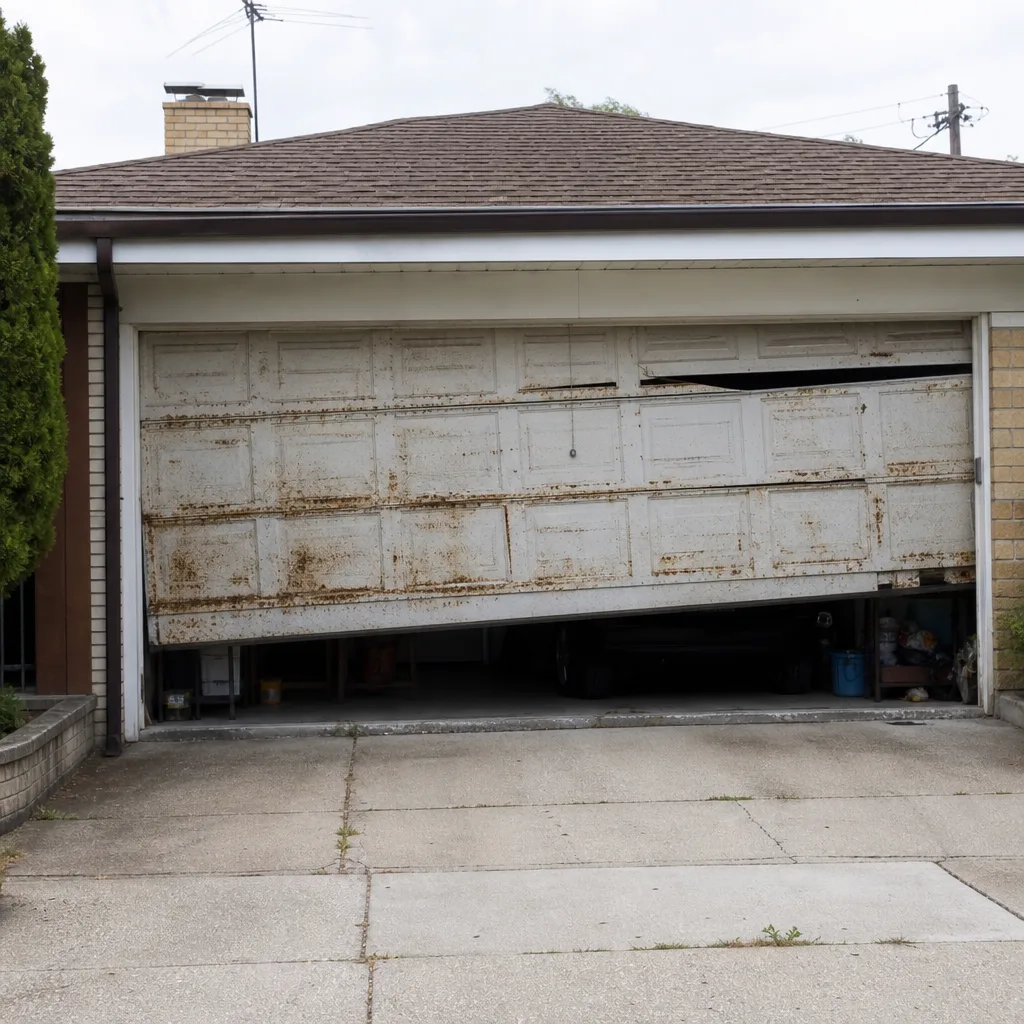 Before
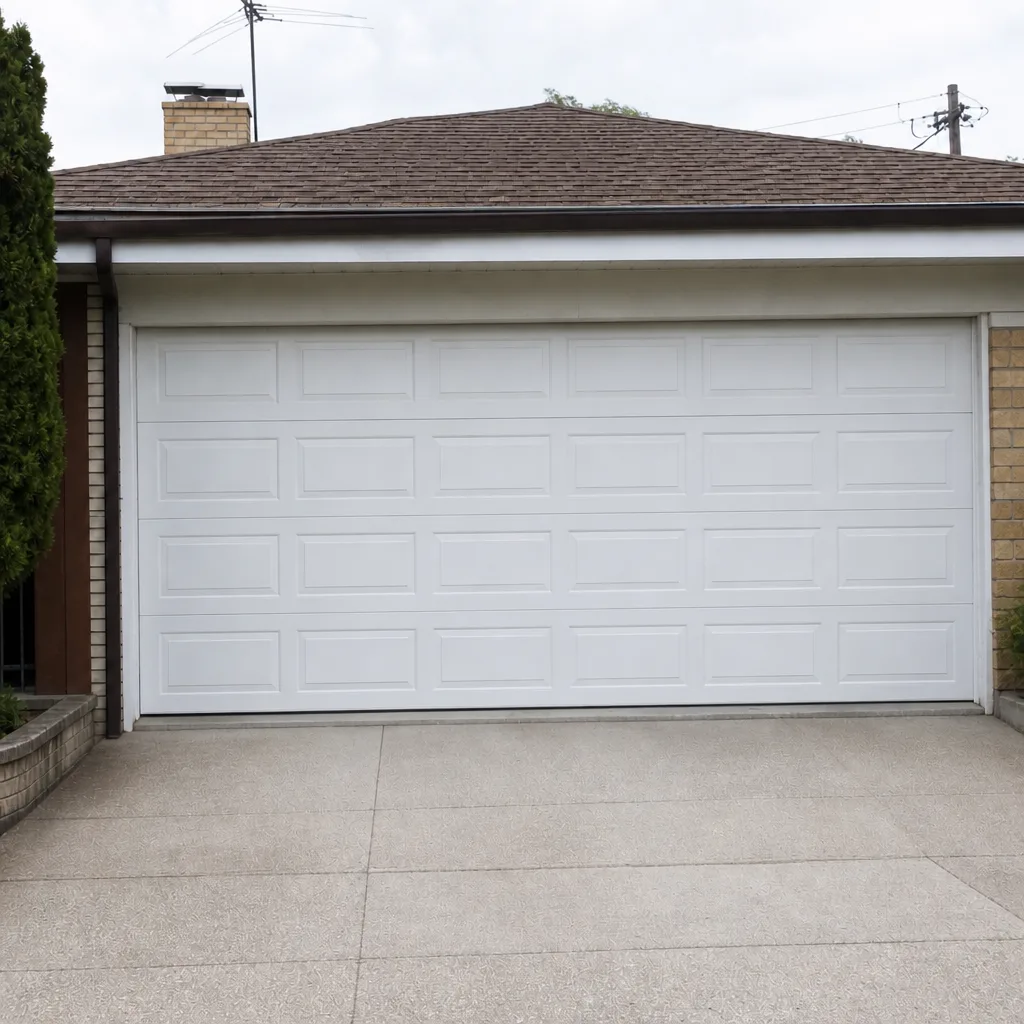 After
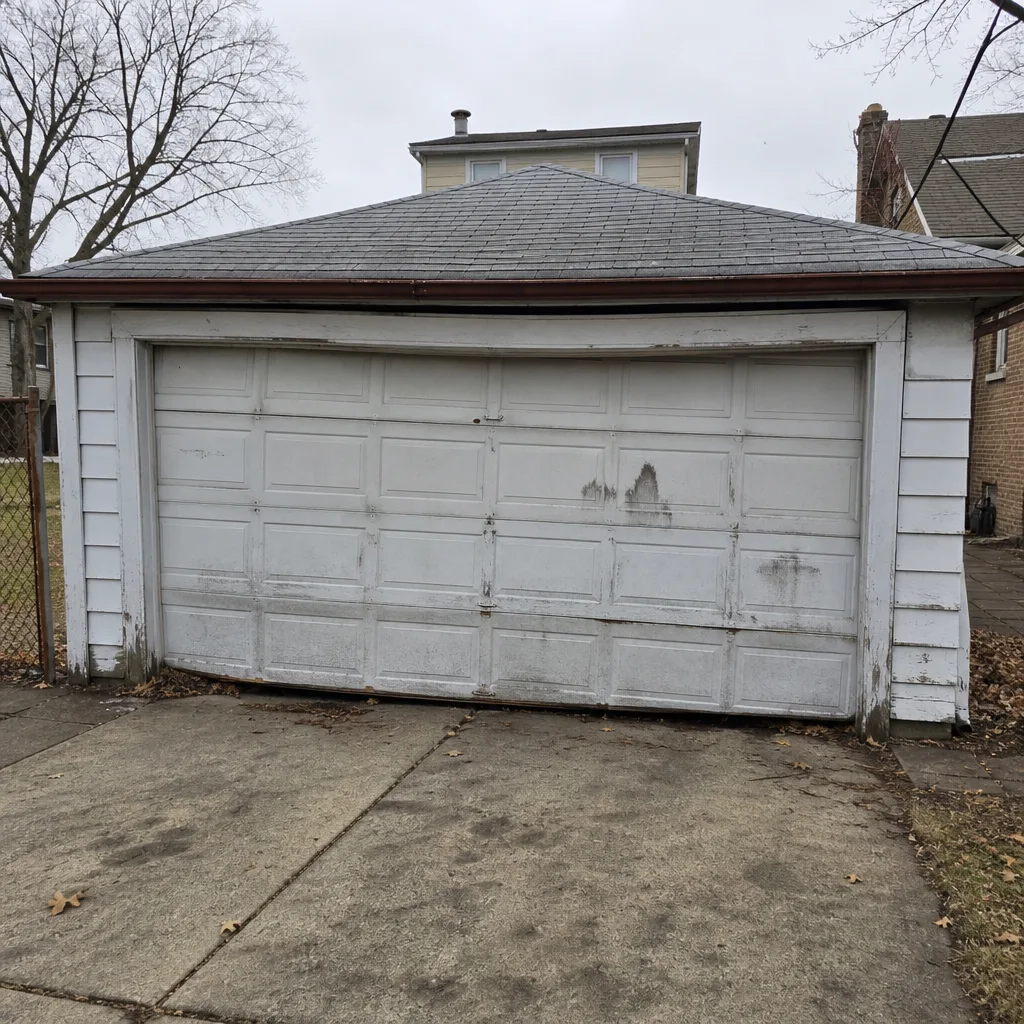 Before
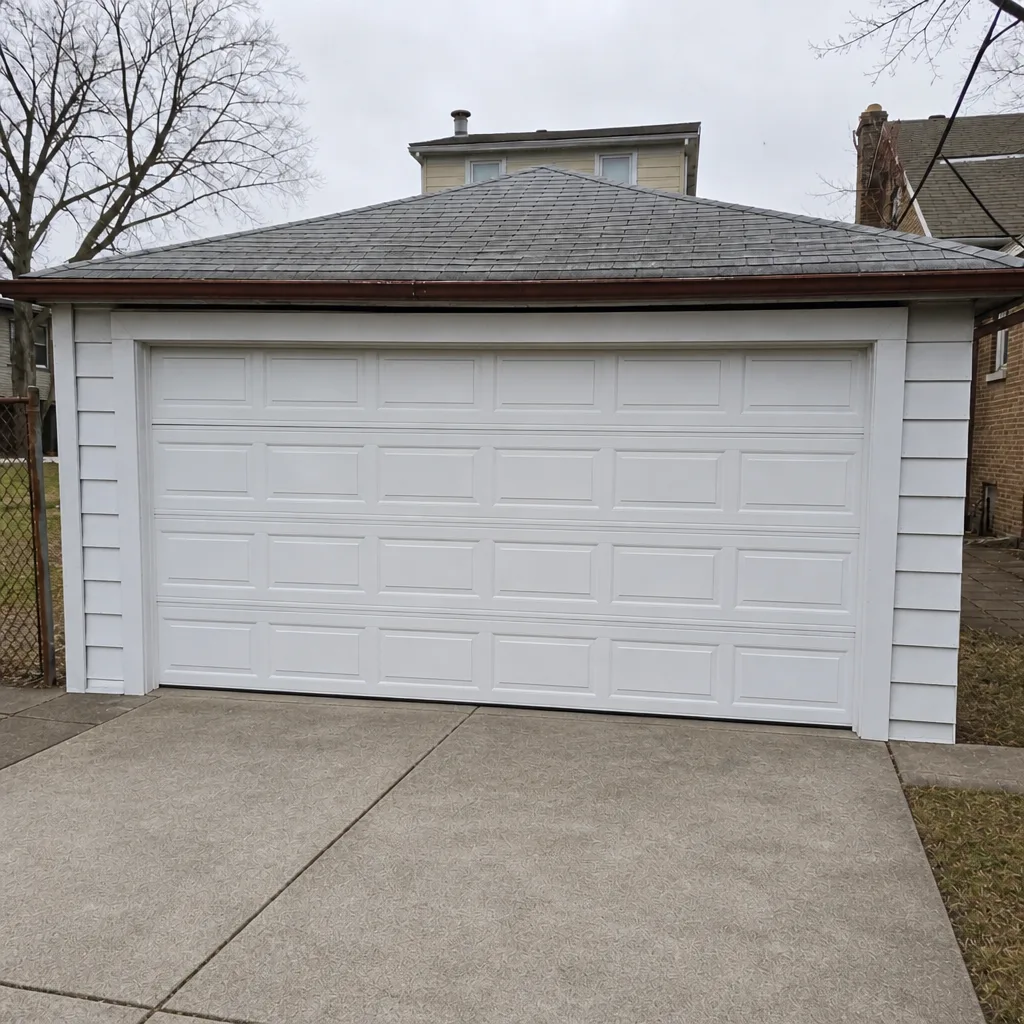 After
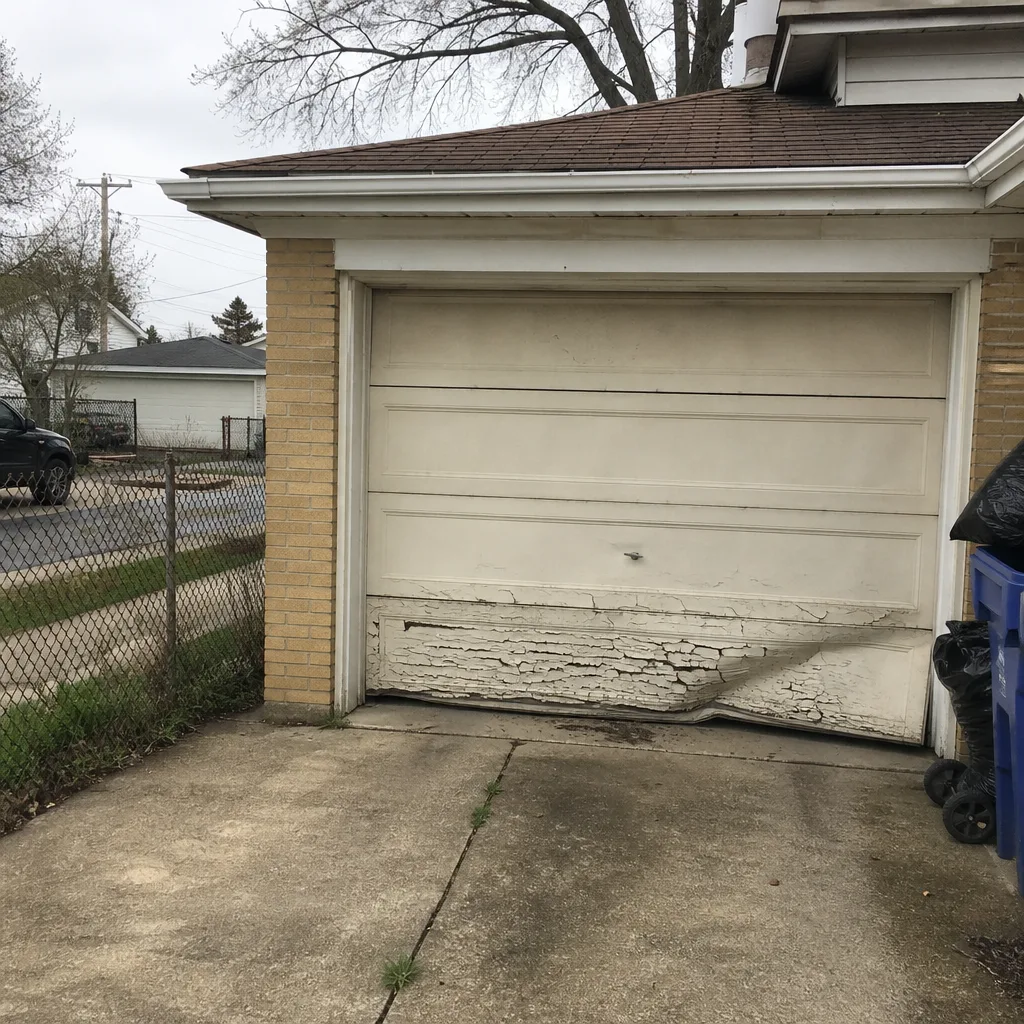 Before
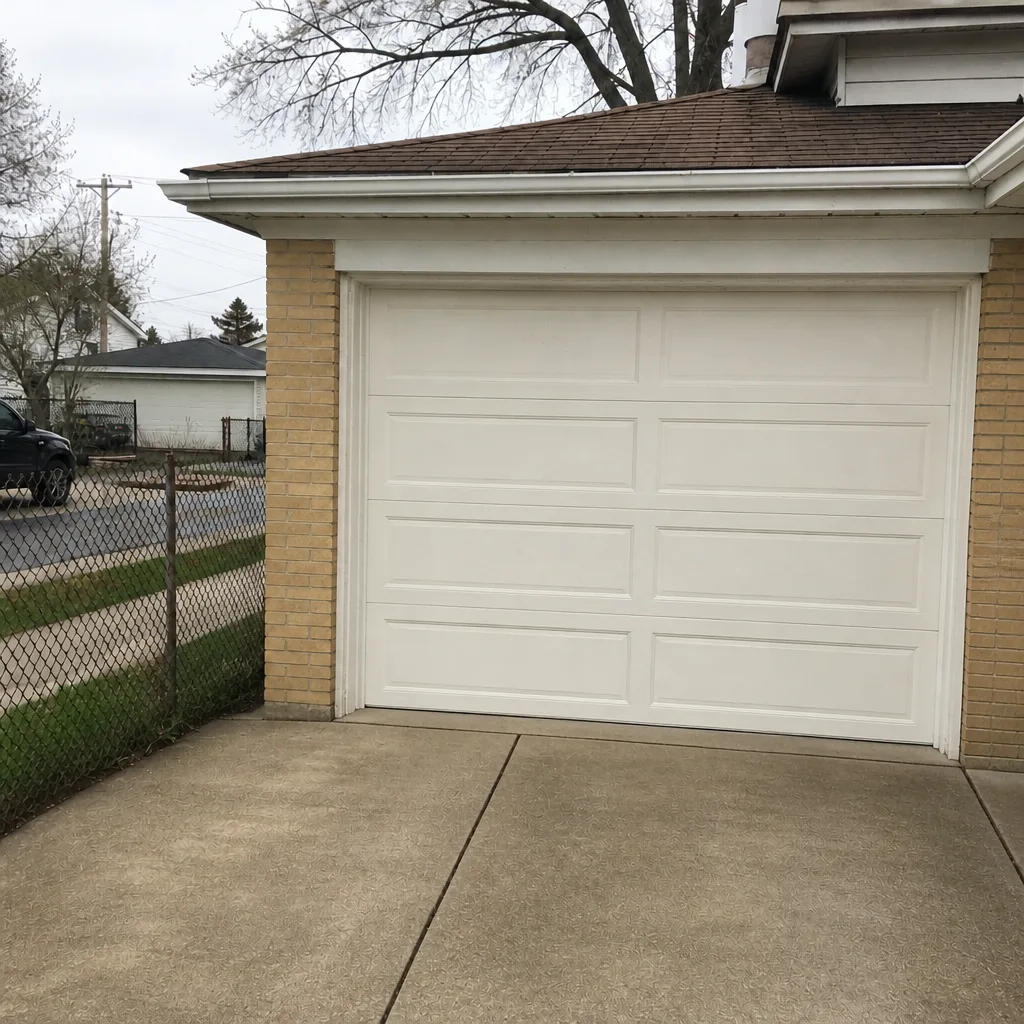 After
Common Mistakes to Avoid
- Treating maintenance as once a year. Garage doors in Portage Park face four different stress conditions across the calendar. A single annual tune-up will always be a step behind the next failure, because it doesn’t match the door’s actual seasonal exposure.
- Ignoring a winter balance drift. A door that was balanced in October can be overtensioned by February as the steel contracts. Waiting until spring to check it means the opener has been fighting an imbalance all winter.
- Using the wrong lubricant. Household oil and thick grease both thicken in cold weather and add resistance. Use a cold-rated garage door lubricant, especially before winter.
- Adjusting springs or cables yourself. This is the most dangerous part of a garage door and the most common cause of serious injury. Spring and cable work belongs to a trained professional, always.
- Skipping the bottom seal on alley garages. Standing water at the threshold of an alley-facing door corrodes the bottom panel and freezes against the door in winter. Replace that seal before it becomes a structural repair.
- Replacing the whole door when a repair will do. A failing opener, a worn seal or a single bad panel doesn’t require a new door. A targeted repair is usually the right call, and a good technician will tell you when replacement is actually the smarter spend.
- Not testing the safety reverse. The reverse and photo-eye system is the most important safety feature on the door, and it’s the one homeowners test least. Test it after every lubrication and at the change of each season.
When to Call a Professional
Some of the work above is genuinely do-it-yourself territory: wiping down the tracks, applying lubricant, replacing a weatherseal, checking the photo-eyes. The rest isn’t. Call a professional if the door won’t hold its position when opened halfway, if the opener is straining or stopping mid-cycle, if any cable shows fraying or rust, if you hear a loud snap from the spring area, or if the door has come off its track. Any of those is a safety matter, not a maintenance item.
Our technicians have up to 12 years of experience and are trained specifically on spring repair as safety work. We work on your brand, including LiftMaster, Chamberlain, Genie, Craftman, Clopay, Amarr, Wayne Dalton and Raynor, and we handle the whole system under one service umbrella: springs, opener electronics, panels and hardware. Garage Door Repair Portage Park offers free estimates in Portage Park, and every price is quoted and agreed before any work starts. Call (844) 743-1041.
Frequently Asked Questions
Four times a year, matched to the four seasons: a post-winter inspection in spring, a heat and humidity check in summer, a full pre-winter prep in fall and a balance watch through winter. Portage Park’s freeze-thaw cycles stress the door differently in each season, so a once-a-year tune-up leaves gaps. If you do only one, make it the fall prep, because it protects the whole winter ahead.
Because the freeze-thaw cycle from January through March has been working every bolt, bracket and hinge loose for three months, and the first warm week brings heavy use. The spring failure is the final result of winter damage that nothing was checking for. The quiet months do the damage; the warm months reveal it. That’s why the post-winter inspection in spring is the most important checkpoint of the year.
Yes. As the steel contracts in sub-zero temperatures, the door’s effective weight and the friction through the track change, and a spring calibrated to mild weather no longer matches the load. The spring hasn’t moved; the relationship between spring and door has. That’s why the spring balance should be re-checked before winter. Adjusting the spring is safety work and needs a trained technician, so call (844) 743-1041 rather than attempting it yourself.
Heat pushes an opener toward its duty-cycle limit, especially in an unventilated garage, so the motor runs hotter and ages faster on every cycle. If the door is already out of balance from an unchecked winter, the opener works even harder and overheats more. Correcting the balance is what stops the opener from straining. If you have a smart opener from LiftMaster, Chamberlain or Genie, its app diagnostics will often show the strain before you’d hear it.
Yes. Galvanized lift cables resist corrosion but are not immune to it, and an unventilated Portage Park garage traps summer humidity where it collects on cables, drums and springs. Once the zinc coating breaks down, the cable weakens under load and can fail suddenly. Any visible rust or fraying on a lift cable means it’s time for a professional inspection. Cables are safety work, not a homeowner fix.
Yes, because an alley door has no overhead protection, takes deflected wind and debris at ground level and often sits at a low threshold where water collects and freezes. That accelerates corrosion, seal wear and track fouling compared to a sheltered suburban garage. Clear the tracks after wind events, watch the bottom seal closely and pay particular attention to the threshold when you prep for winter.
No. The written estimate is the price. We look at the door, quote the job and agree it with you before any work starts, so there are no surprise invoices afterward. If we find something additional during the job, we’ll tell you before doing anything you haven’t approved. Call (844) 743-1041 to set up a free estimate.
The local pros we connect you with are licensed and insured as their state requires, and our technicians have up to 12 years of experience. Spring repair is handled as a dedicated safety service by trained technicians, not general handymen. If you’re unsure whether a problem is maintenance or a repair, call (844) 743-1041 and we’ll help you figure out which it is.
The Bottom Line
Garage door care in Portage Park isn’t a single annual chore. It’s four seasonal checkpoints matched to what each season does to the door: a post-winter inspection in spring to catch freeze-thaw damage, summer attention to opener heat and cable corrosion, a fall prep sequence that protects the whole winter, and a winter balance watch on the spring. Alley-facing garages need more of all of it. Get the timing right and the door stays ahead of failure. Get it wrong and the failure shows up when you least expect it, usually in a warm week that hides the real cause. When the season’s work turns into a repair, our technicians handle the whole system, from springs to opener electronics to panels, on the brands you actually own. Call (844) 743-1041 for a free estimate.
Written by the team at Garage Door Repair Portage Park.