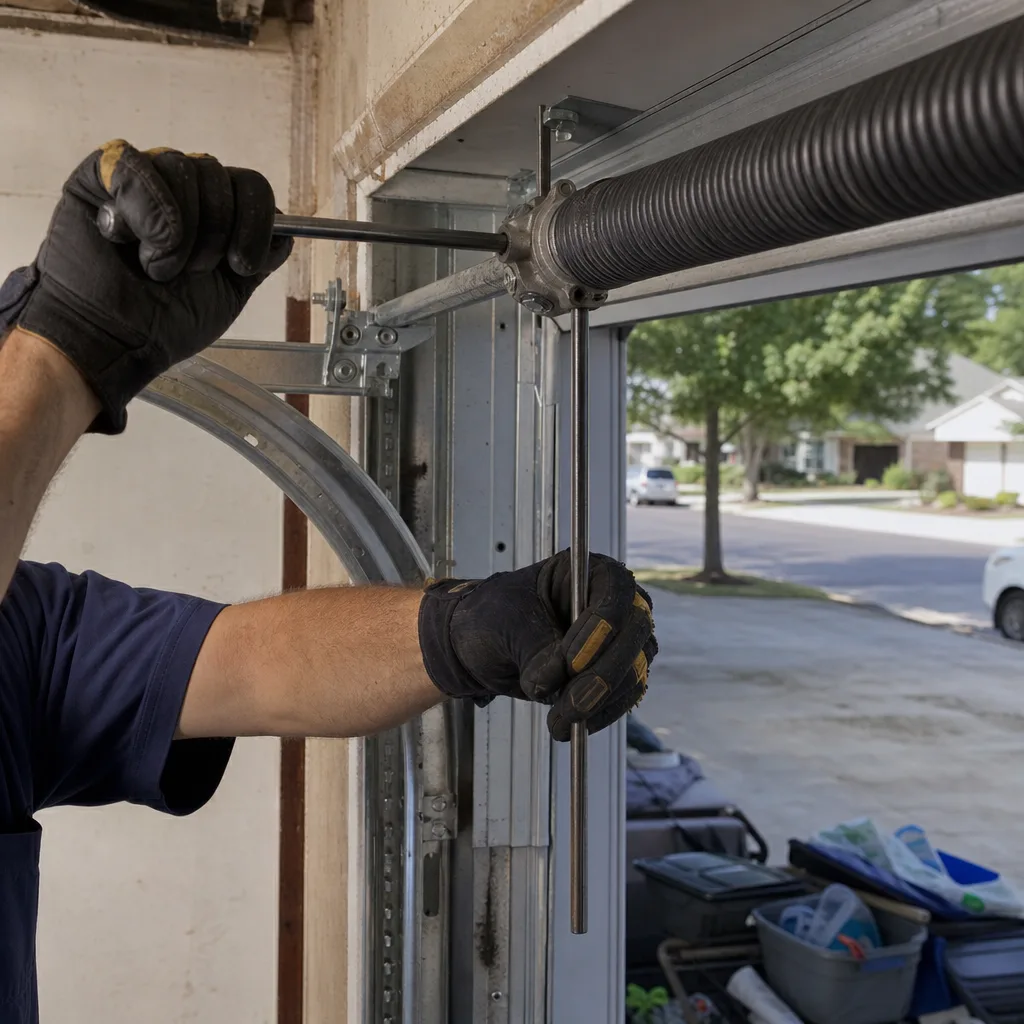
Last updated November 21, 2026
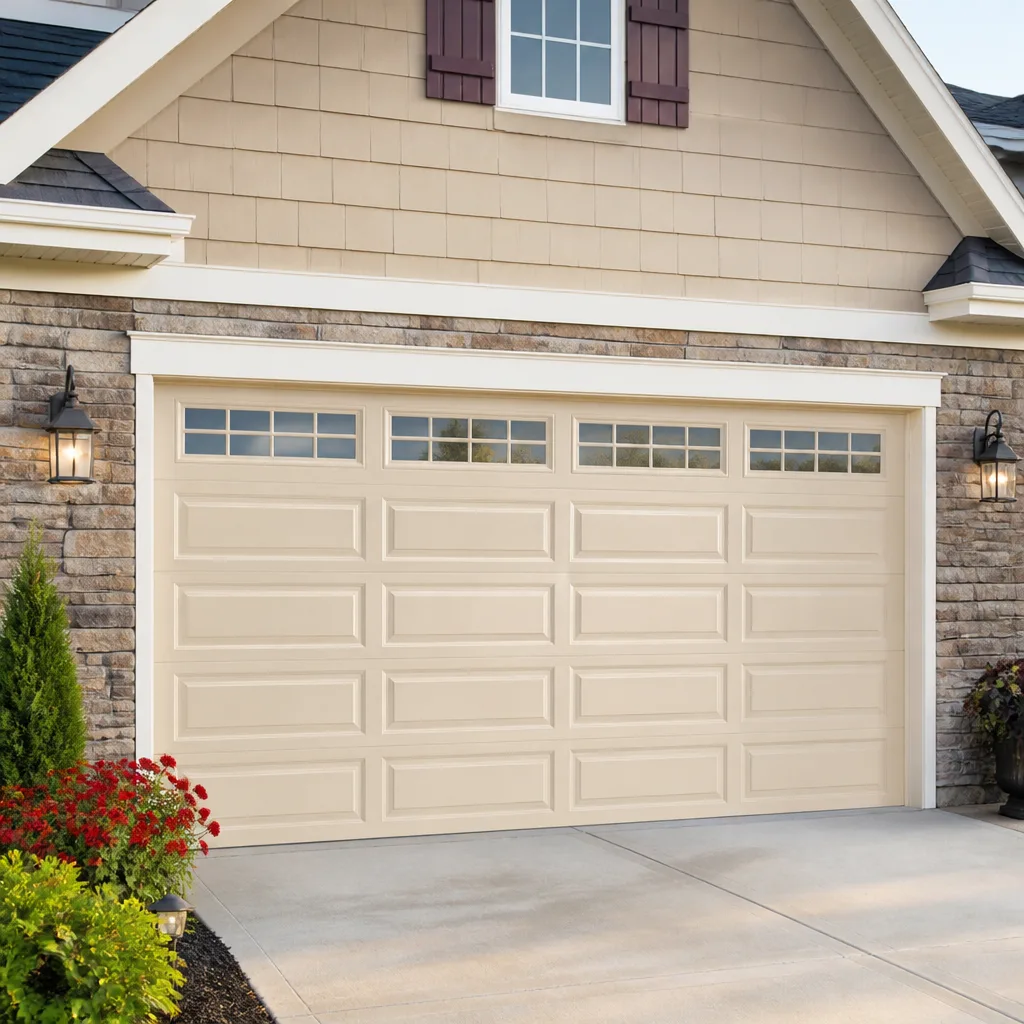 Raised-panel steel
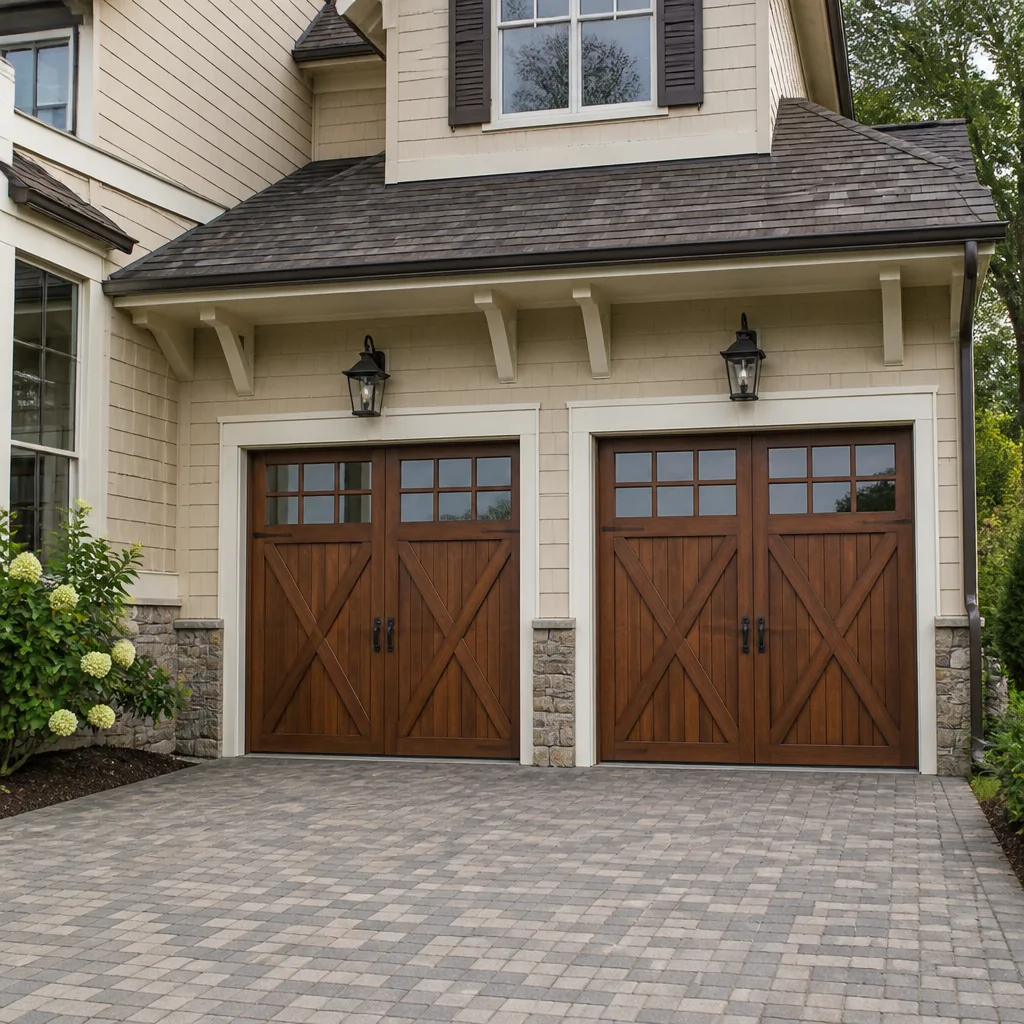 Carriage house
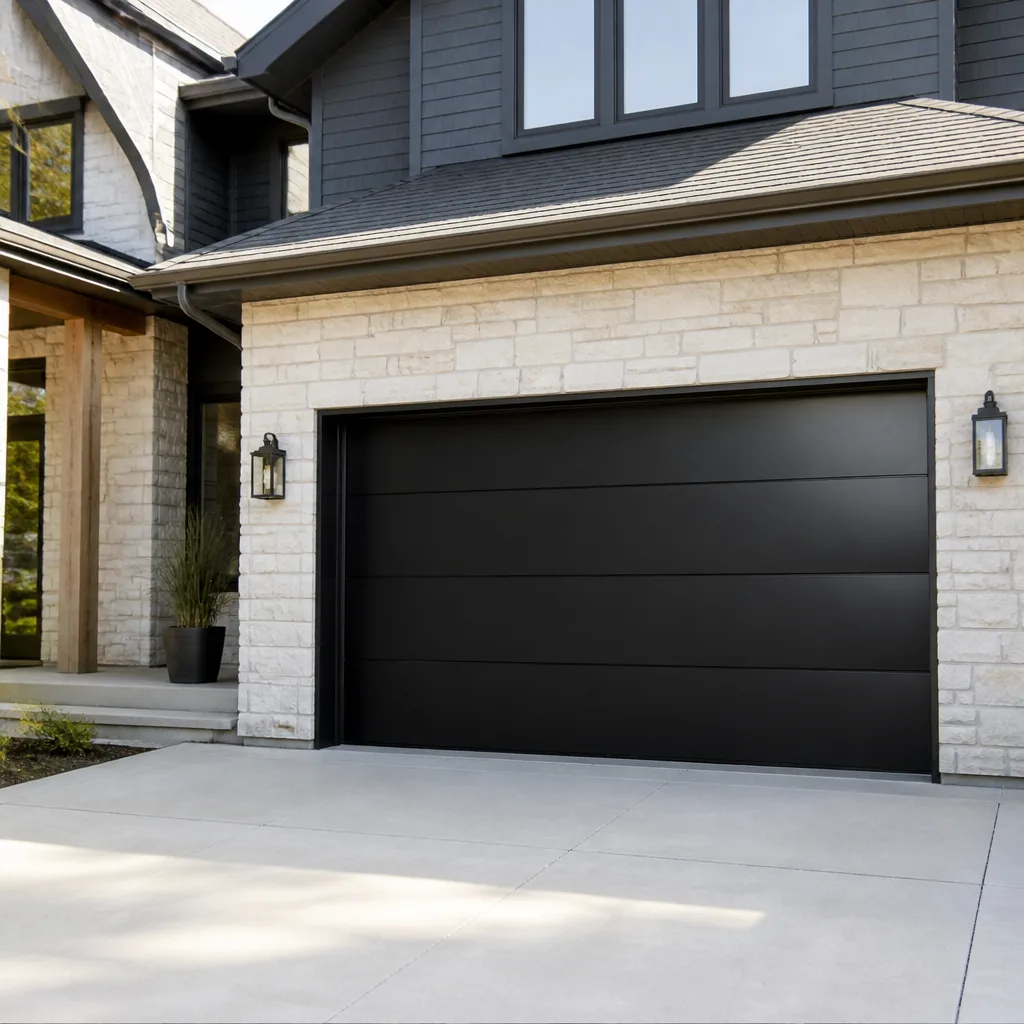 Modern flush
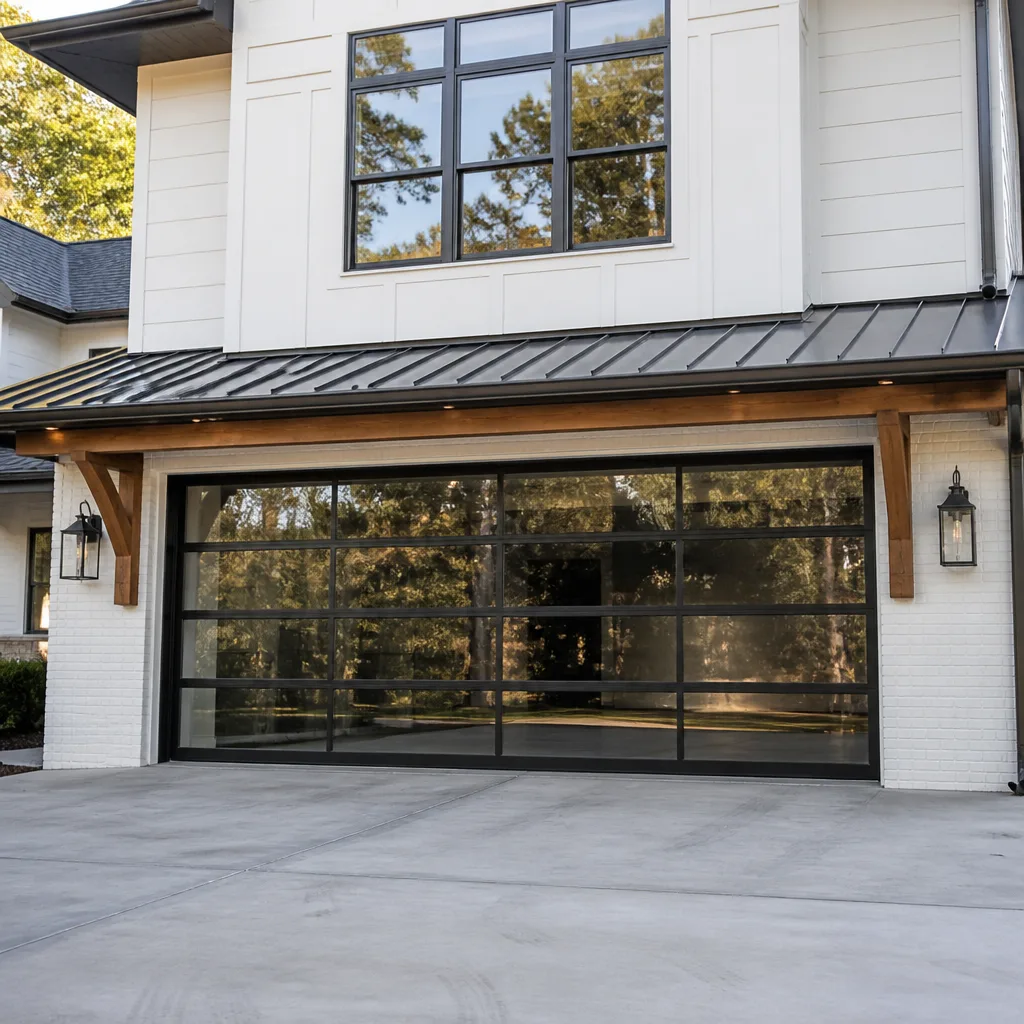 Full-view glass
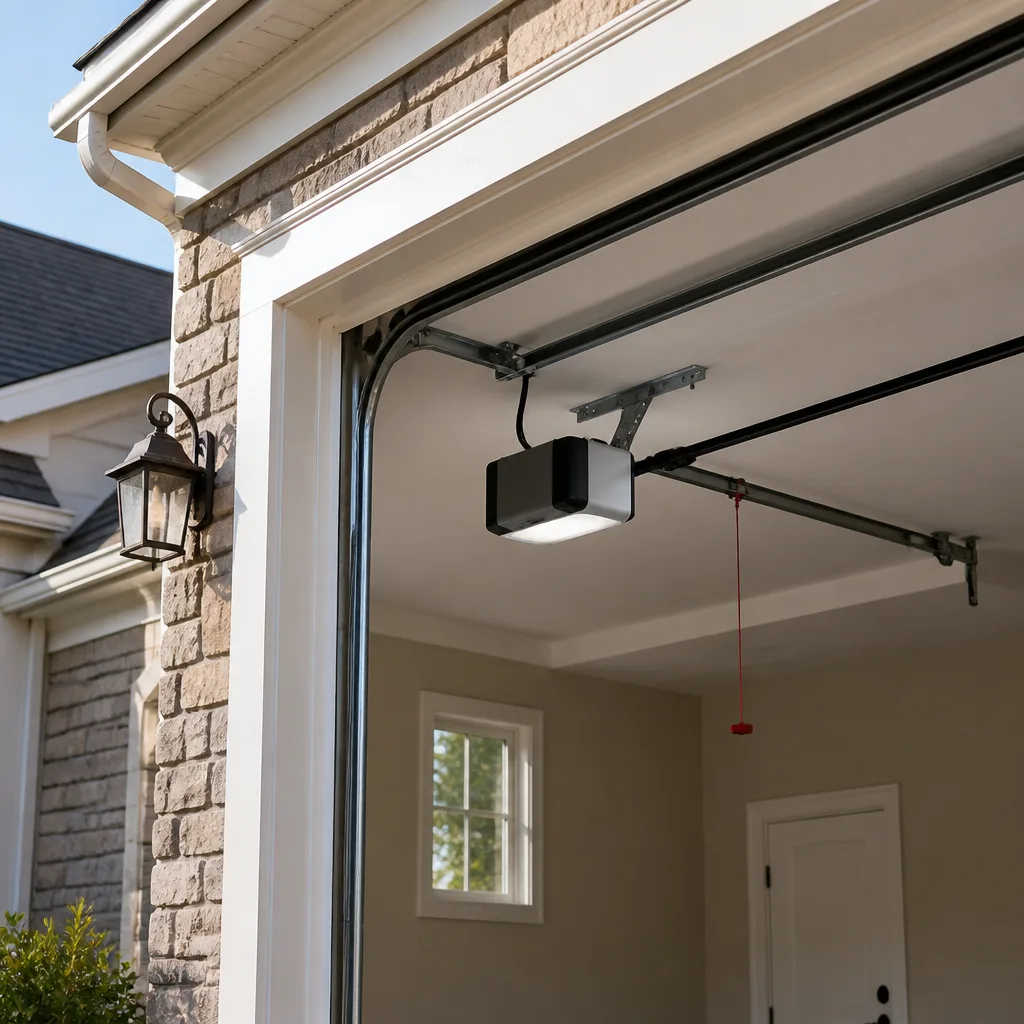 LiftMaster openers
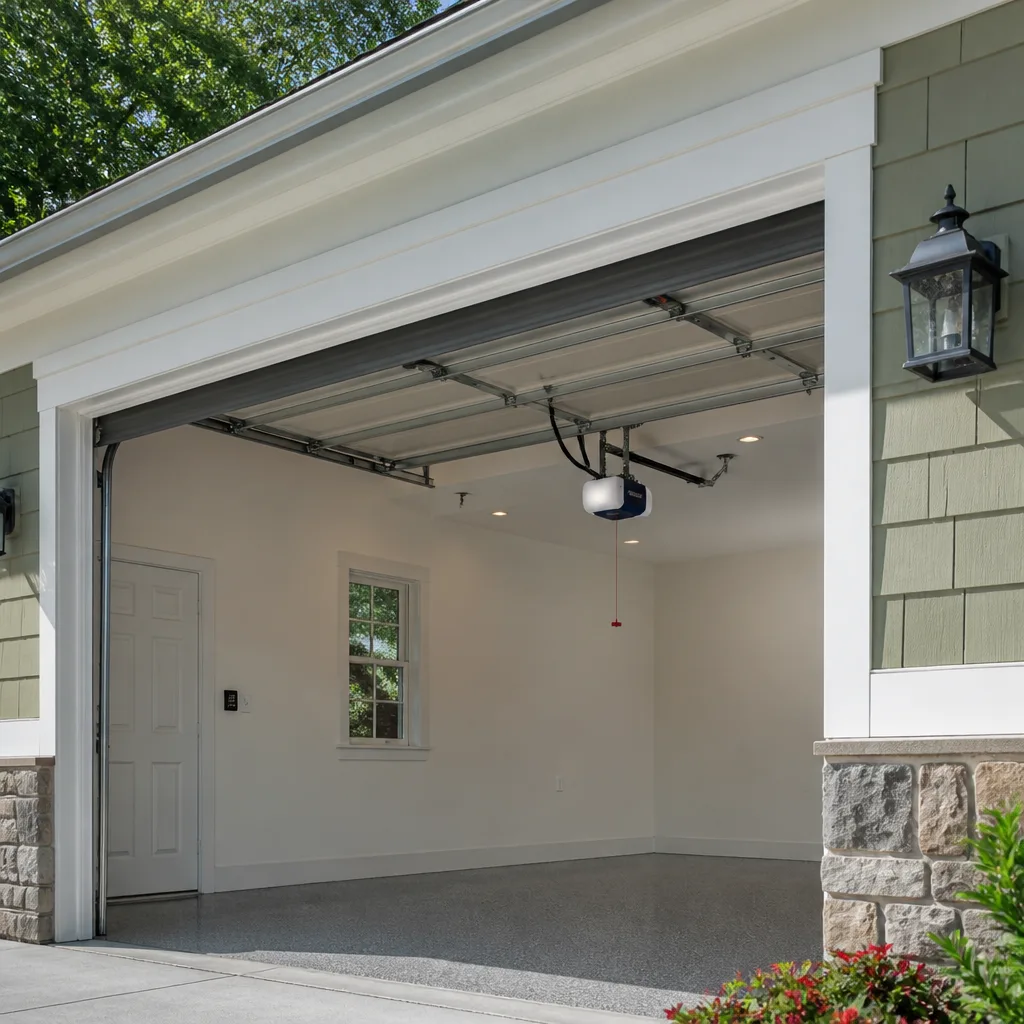 Chamberlain openers
Full 25-point door and opener safety check with every visit - springs, cables, rollers, tracks, and your LiftMaster or Chamberlain opener included
You get a price before we start. It does not change when the pro arrives.
Get your free estimateThe Complete Guide to Garage Doors in Portage Park
Most homeowners can name their car’s engine size but have no idea what spring type is on their garage door. That gap gets expensive the moment a spring snaps at 7 a.m. on a January morning and nobody in the house can tell the difference between a worn torsion spring, a frayed cable, or an opener that’s simply lost its programming. In Portage Park, the stakes are a little higher than in most places: narrow alley approaches, brick two-flats, and a climate that swings from below zero to the high nineties every year put real stress on every moving part. This guide walks through what’s actually on your door, how the Chicago climate wears it down, how to spot trouble in ten minutes, and when a repair makes more sense than a replacement.
Quick Answer
A garage door in Portage Park is a system of six interacting parts: the springs (torsion or extension), the cables, the rollers, the tracks, the panels, and the opener. Each one fails on its own schedule, and each one has a different repair. Understanding which component is failing lets you ask for the right fix instead of being pushed toward a whole new door. Regular visual checks and knowing your spring type are the two habits that prevent the most expensive surprises.
Styles & brands we work with
- Raised-panel steel
- Carriage house
- Modern flush
- Full-view glass
- LiftMaster openers
- Chamberlain openers
Table of Contents
- How Portage Park’s Alley Garages Shape the Whole System
- The Six Components of a Full Garage Door System
- Why Chicago’s Freeze-Thaw Cycle Wears Your Door Faster
- The Brand Landscape in Portage Park and Why It Matters for Parts
- How to Read Your Door’s Age and Wear in Ten Minutes
- Spring Repair: The One Job You Should Never Attempt Yourself
- Openers: Legacy vs. Smart-Home Systems
- Repair or Replace? A Straightforward Decision Framework
How Portage Park’s Alley Garages Shape the Whole System
Portage Park’s residential blocks are built around an alley grid, not the wide suburban driveway model that most garage door content assumes. That single fact changes nearly everything about how a door is sized, mounted, and driven. A brick two-flat with a rear garage typically has a narrower approach than a suburban garage, limited clearance above the opening, and less room for a car to sit perpendicular to the door while it opens. Every dimension matters more here.
When a door is measured for that kind of structure, the critical numbers are:
- Rough opening width and height – the actual framing gap, not the existing door’s size. A quarter-inch difference changes the panel order.
- Headroom – the space above the door’s top edge that a torsion spring assembly and the opener rail need. Standard low-headroom setups are common in alley garages and often require a specific torsion configuration rather than a standard one.
- Backroom – how far the door travels into the garage. Short garages may need a low-clearance or high-lift track instead of a standard track.
- Side clearance – the space beside the opening for the vertical track and the torsion tube bearing plates.
These constraints explain why alley-garage doors in Portage Park often come in non-standard widths and why an off-the-shelf panel from a big-box store won’t match. It’s also why we ask about your opening before we quote anything: a door that measures cleanly online may not fit your actual garage.
Opener placement is affected too. On a tight alley lot, the opener usually mounts to a ceiling joist that’s close to the door’s top edge, so the rail run is short and the opener’s chain or belt tension sits in a tighter tolerance band. If you’re having issues with a chain slipping or a rail flexing, that’s often a clearance problem, not a motor problem. Our garage door opener repair team deals with this layout constantly.
The Six Components of a Full Garage Door System
Every sectional garage door is a small mechanical system, and each part has a distinct job. When something’s wrong, knowing which component is failing is the difference between a targeted repair and an unnecessary replacement.
- Torsion or extension springs. This is the power source. Torsion springs mount on a horizontal steel shaft above the door and twist as the door closes; extension springs stretch along the horizontal tracks. Both counterbalance the door’s weight so that a human or a motor only has to lift a fraction of it. Failure is loud and it happens without warning.
- Cables. The two cables on each side run from the bottom corners up to the drum at the spring shaft (on torsion setups) or to the pulleys (on extension setups). A cable that frays means the door can drop on one side or come off the track entirely.
- Rollers. These run in the tracks and carry the door’s weight as it travels. They wear, they get noisy, and eventually they seize. Seizing rollers drag on the opener and shorten the motor’s life.
- Tracks. The curved and horizontal rails that guide the door. Dings and bends from a bumper tap are common in tight alley garages and can cause the door to bind.
- Bottom seal. The rubber strip on the lowest panel. It keeps water, snow, leaves, and vermin out, and it’s the part that takes the most abuse from Chicago’s winter slush. A torn seal lets in cold air and eventually water that rots the bottom panel.
- Opener. The motor, rail, trolley, and electronics that lift and lower the door. Belt-drive and chain-drive are the two most common types; screw-drive appears mostly in older installs. The opener is the component most homeowners think of first, but it’s often the last thing to actually fail.
We handle all six components in one visit, which is the practical benefit of one team covering repair, opener repair, installation, parts supply, and spring repair together. When a door binds because a roller is seizing and the opener is straining as a result, you don’t want three separate contractors with three separate schedules. Same system, one call.
Why Chicago’s Freeze-Thaw Cycle Wears Your Door Faster
Chicago’s temperature swings are hard on every metal part on a garage door. A single winter might move from well below freezing to a mild thaw and back again several times, and each of those cycles does a small amount of damage. The clearest example is the bottom panel: snowmelt seeps into the bottom seal, freezes overnight, expands, and pushes the seal away from the panel. After enough cycles, the panel itself starts taking on water.
Metal behaves the same way at a smaller scale. Galvanized steel – the standard material for tracks, hinges, and torsion tubes – holds up well to moisture on its own, but the zinc coating erodes fastest at cut edges, bolt holes, and any scratches. In a suburban climate with one long winter, that’s a slow process. In Portage Park, where a hard freeze in January might be followed by a 45-degree thaw in February and another hard freeze in March, the same hardware cycles through stress far more often. That’s why original galvanized hardware on an older door here so often shows surface rust along the hinges and behind the roller brackets long before you’d expect it.
The parts that hold up best in this climate:
- Hot-dipped galvanized hinges and brackets – the coating is thicker than electroplated hardware and resists the repeated wet-dry cycle much better.
- Nylon rollers over steel rollers – steel rollers rust and seize at the axle; nylon rollers don’t corrode and run quieter.
- Sealed bearings on the torsion shaft – keeps moisture out of the bearing plate where it would otherwise cause binding.
- Steel or aluminum panels with a factory powder-coat finish – the finish handles the sun’s UV and the winter salt splash that radiates up from the alley floor.
- Vinyl or EPDM bottom seals – more flexible in cold than basic rubber, so they don’t crack on the first subzero morning.
The summer side matters too. A south-facing garage door on a Portage Park two-flat can hit surface temperatures well above ambient, and that heat cycling is what eventually makes a wooden bottom panel warp or a steel panel’s paint blister. The same door can see near-zero in January and 95-plus degree sun in July – it’s not just cold that wears a system down.
The Brand Landscape in Portage Park and Why It Matters for Parts
Walk down any residential block in Portage Park and you’ll pass doors from most of the major manufacturers, and the mix tells you something useful: this is a neighborhood where installs have been done by many different contractors across many decades, which means the parts on your door can come from a handful of different brand ecosystems. That matters when something breaks. A Craftsman opener from a decade-old install takes a different logic board than a LiftMaster from the same era, and a Wayne Dalton panel has different hinge punch patterns than a Clopay.
We’re factory-familiar with eight leading brands: LiftMaster, Chamberlain, Genie, Clopay, Amarr, Wayne Dalton, Craftsman, and Raynor. That spread isn’t marketing – it’s the practical answer to a real problem. A technician who only knows one or two brands is likely to misdiagnose a symptom that’s actually a well-known trait of a specific system. Knowing the brand means knowing the quirk.
Some brand-specific things we run into regularly:
- LiftMaster and Chamberlain openers share parent engineering (Chamberlain Group builds both), so many internal parts and diagnostic behavior overlap. Travel module faults and logic board issues are common on older units from both.
- Craftsman openers – often sold under the Sears brand, with parts that cross-reference to Chamberlain. Older Craftsman units are common in Portage Park garages, and they’re usually fixable when the problem is on the board or the trolley rather than the motor.
- Wayne Dalton doors have a distinctive track and hinge profile on some models, which matters when only the door is being repaired and the existing hardware has to match.
- Raynor doors tend to hold up well but use parts that aren’t stocked at every hardware store, so getting the right replacement hinge or roller is faster if the tech already knows the model line.
Brand familiarity also speeds up parts. A tech who knows what fits a given model can pull the right part on the first visit instead of returning with a second one. Get the part, skip the wait. That’s a big part of why we’ve built our parts supply as a standing service rather than an afterthought. For a full replacement, our garage door installation team works within the brand that best fits your opening – not the brand that happens to be on the truck.
How to Read Your Door’s Age and Wear in Ten Minutes
You don’t need to know the door’s model number to get a good read on its condition. Five visible indicators cover most of what a trained tech looks at on a first visit, and you can check all of them in under ten minutes with nothing more than a flashlight and your ears.
- Spring appearance. Look at the spring above the door (torsion) or alongside the tracks (extension). A thin, evenly wound coil with a dry, uniform surface is healthy. A coil that has visible gaps, a stretched section, or a thin rust line running along it is a warning sign. On extension springs, look for a safety cable threaded through the center – if there isn’t one, that spring is a hazard and should be upgraded.
- Cable condition. Trace both cables from the bottom corner up. A cable with any fraying, kinks, or a broken strand should be replaced before it snaps. Cables fail without warning once they start to fray.
- Roller noise. With the door closed and the opener disengaged, open the door by hand. A healthy door moves with steady resistance and no rattle. Grinding or squealing from the rollers means they’re worn or seizing.
- Panel alignment. Stand back and look at the door from the front. Panels that don’t sit flush, a visible gap between panels, or a door that looks slightly diamond-shaped (one corner lower than the other) points to a track or spring issue.
- Bottom seal and paint. Run your hand along the bottom edge. A seal that’s brittle, torn, or pulling away from the panel is letting in weather. Blistering or peeling paint on the bottom panel is a sign of moisture intrusion.
If any of these indicators are wrong, don’t ignore them because the door “still works.” A spring that’s starting to fail still lifts the door right up to the moment it doesn’t. That’s when a routine repair becomes an emergency. Our garage door repair team sees this pattern regularly in Portage Park – the door is fine for months, then one morning it won’t budge. That ten-minute inspection is the difference between a scheduled repair and a scramble.
Spring Repair: The One Job You Should Never Attempt Yourself
Spring repair is safety work, full stop. The torsion spring above a residential garage door is under enough tension to do serious injury if it releases unexpectedly, and the tools used to wind and unwind it are specialized for exactly that reason. This is the part of the system where “I can probably handle it” is the wrong instinct. We treat spring work as its own dedicated service, not an add-on, because it deserves its own attention and its own safety protocol.
The mechanics explain why. A torsion spring holds the door’s weight in a wound state – typically hundreds of pounds of force stored in a steel coil. When a spring breaks, that force releases instantly. Extension springs, mounted along the tracks, snap toward the center of the door when they fail, which is why modern installs include a safety cable threaded through them. Neither failure is something to be near when it happens, and neither is something to inspect by hand while the spring is still under tension.
What a spring replacement involves:
- Disengaging the opener and locking the door in the fully open position so the tension is released safely
- Removing and replacing the spring (or matched pair) with the correct wire gauge and inside diameter for the door’s weight
- Winding the new spring to the correct number of turns for the door’s height and track configuration
- Balancing the door so it holds position at every point in its travel, not just fully open and fully closed
- Testing the opener’s force settings and safety reverse after reconnecting
One detail worth knowing: a spring price is usually quoted for one spring, but springs are often replaced in matched pairs because both springs on the shaft have seen the same cycling. A pair costs roughly twice a single spring. Your written estimate will show exactly which configuration is being quoted so there’s no confusion when the invoice comes.
Trained technicians with up to 12 years of experience handle this work. For Portage Park homeowners with an older door, the spring is often the first thing we look at because it’s the part doing the most mechanical work every single day. If you suspect a spring problem, call before you touch anything: (844) 743-1041.
Openers: Legacy vs. Smart-Home Systems
The opener world has split into two camps, and which one your door is in affects how it’s diagnosed and repaired. Legacy openers – typically chain-drive or screw-drive units from before the smartphone era – were built simple: a motor, a limit switch, a safety reverse mechanism, and a wall button. They’re reliable, they’re easy to diagnose, and many well-maintained ones are still running decades after installation. Smart-home openers add connectivity – an app on your phone, integration with voice assistants, sometimes a camera – plus modern electronic safeties.
Both need repair, and both fail in their own ways:
- Legacy openers most often fail at the logic board, the limit switch, or the gear assembly. A chain-drive opener with a stripped gear still runs the motor but won’t move the trolley – a distinctive symptom called “motor runs but door doesn’t move.” A bad limit switch makes the door stop at the wrong position.
- Smart openers more often fail at the connectivity module, the battery backup, or the safety sensor alignment. When the door opens three feet and stops, or the app shows the door is open when it’s closed, the diagnosis usually starts with the sensor and the board rather than the motor.
Our opener expertise spans the brands that dominate Portage Park installs: LiftMaster, Chamberlain, Genie, and Craftsman. Those four cover most of the residential openers we see on the northwest side, and knowing each brand’s specific quirks makes repair faster and more accurate. If you’re considering an upgrade to a smart opener, we can talk through what your existing wiring supports and where a modern unit actually adds value for how you use the garage. And if your legacy opener still works well, we’ll say so – repair first, replace only when it makes sense.
The Garage Door Repair Portage Park team handles opener repair as one of five services under the same team that works on springs, panels, and parts. That matters when a diagnosis crosses components – a door that won’t close all the way could be an opener problem, a spring problem, or a track problem, and it takes one visit to know which.
Repair or Replace? A Straightforward Decision Framework
The right question isn’t “is the door old?” It’s “does this door have enough life left to justify the repair?” A twenty-year-old door with a healthy spring, clean tracks, and sound panels may be a better repair candidate than a ten-year-old door with a rotten bottom panel and a track that’s been bent twice. The framework we use:
- Repair if: the spring, opener, or a single component failed but the door panels, tracks, and hardware are sound. A single-component repair returns the whole system to service.
- Repair if: the door is structurally sound but noisy. Rollers, hinges, and a fresh seal often solve a noise complaint without touching the panels.
- Replace if: the bottom panel is rotted through and water has been reaching the panels above it. Patching a rotting bottom panel doesn’t stop the water problem.
- Replace if: the tracks are bent enough that the door can’t be safely returned to smooth travel, or the spring shaft bearings and panel hinges show structural rust in multiple places.
- Replace if: the opening has been modified (a wall moved, a floor poured) and the current door no longer fits the framing without extensive adaptation.
That last case comes up in Portage Park more than it does in newer construction, because many garages here have been added to, re-roofed, or converted over the years. The opening you have today may not match what the original door was designed for.
Our rule is simple: repair first, replace only when it makes sense. If a spring repair and a new set of rollers will give you years more service, we’ll quote that. If the door is past the point where repair is throwing good money at a failing system, we’ll tell you that too – and quote the replacement with the same team that would have done the repair. No contractor hand-offs.
Pricing on either side is quoted and agreed in writing before any work starts. A free estimate from a vetted local professional is the starting point, and the written quote is the price. If the estimate says $X for a spring replacement, that’s what you pay.
Common Mistakes to Avoid
- Assuming a noisy door just needs oil. Noise is a symptom, not a cause. Seizing rollers, a loose hinge, and a failing spring all sound similar from inside the house but need very different repairs.
- Replacing a door when only the spring failed. When a spring snaps, the door itself is usually fine. Full replacement is the expensive answer to a repair-sized problem. The right move is a proper diagnosis before any quote.
- Ignoring the bottom seal through winter. Snowmelt pooling at the bottom of the door is the number one reason bottom panels rot out on Portage Park two-flats. Replacing the seal is cheap; replacing the bottom panel is not.
- Trying to wind a torsion spring without the right tools. Even experienced DIY homeowners get hurt here. Springs are wound to specific turn counts under hundreds of pounds of tension. That’s a trained-technician job.
- Buying a universal opener part from a big-box store. A traveler or logic board that “fits most openers” often doesn’t fit yours. Knowing the specific brand and model saves a return trip and a wasted weekend.
- Assuming an alley garage can take a standard-size door. Portage Park alley garages often have non-standard rough openings, low headroom, or short backroom. Measuring before ordering is the only way to avoid a door that doesn’t fit.
- Letting a bent track go because the door “still opens.” A bent track forces the rollers to bind, which strains the opener and eventually damages the panels. Small bend, small fix; big bind, expensive repair.
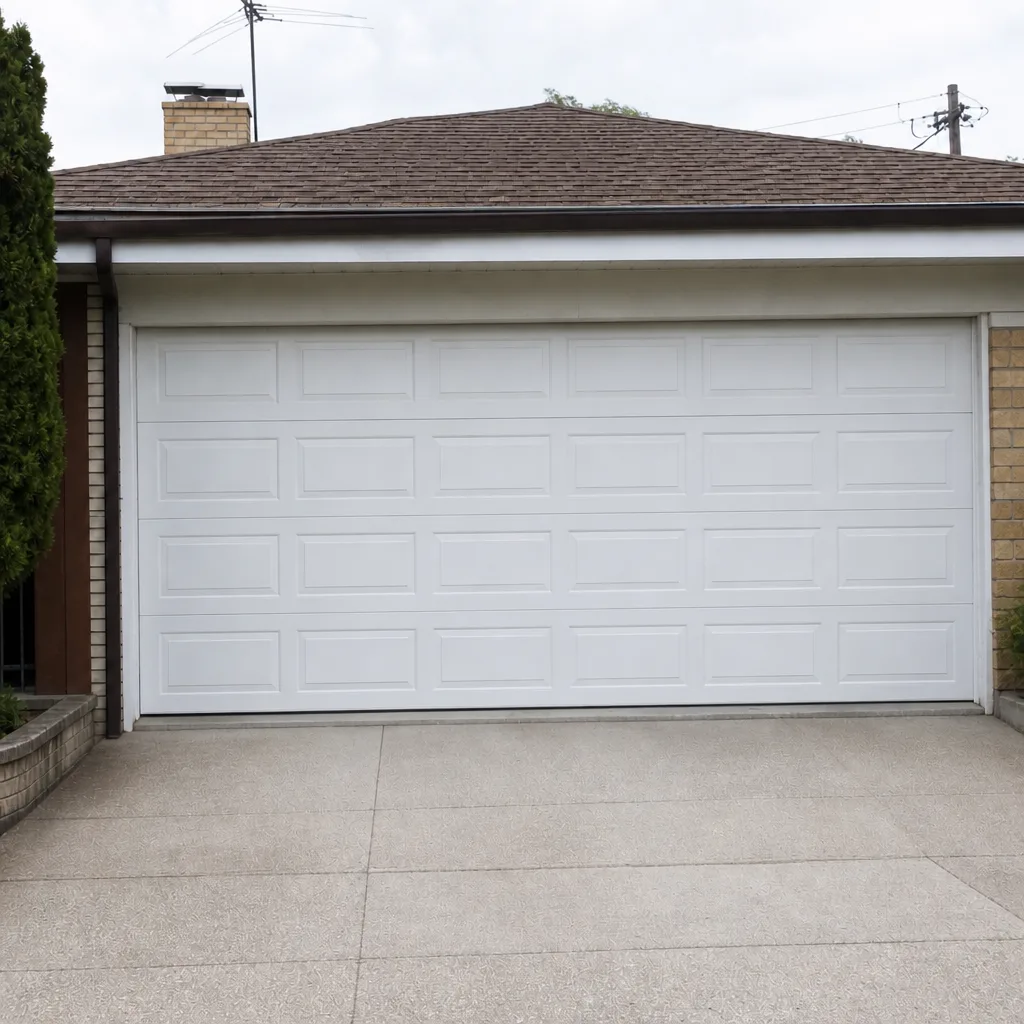
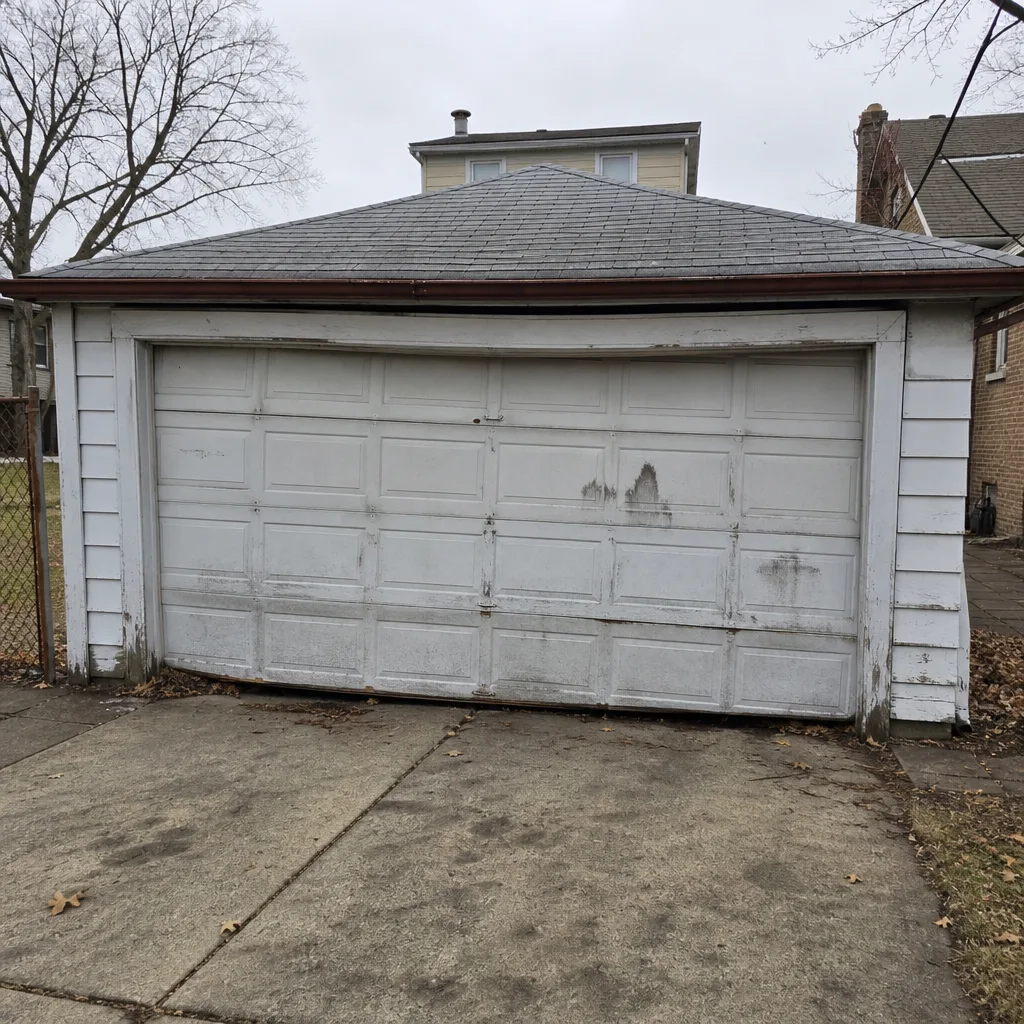
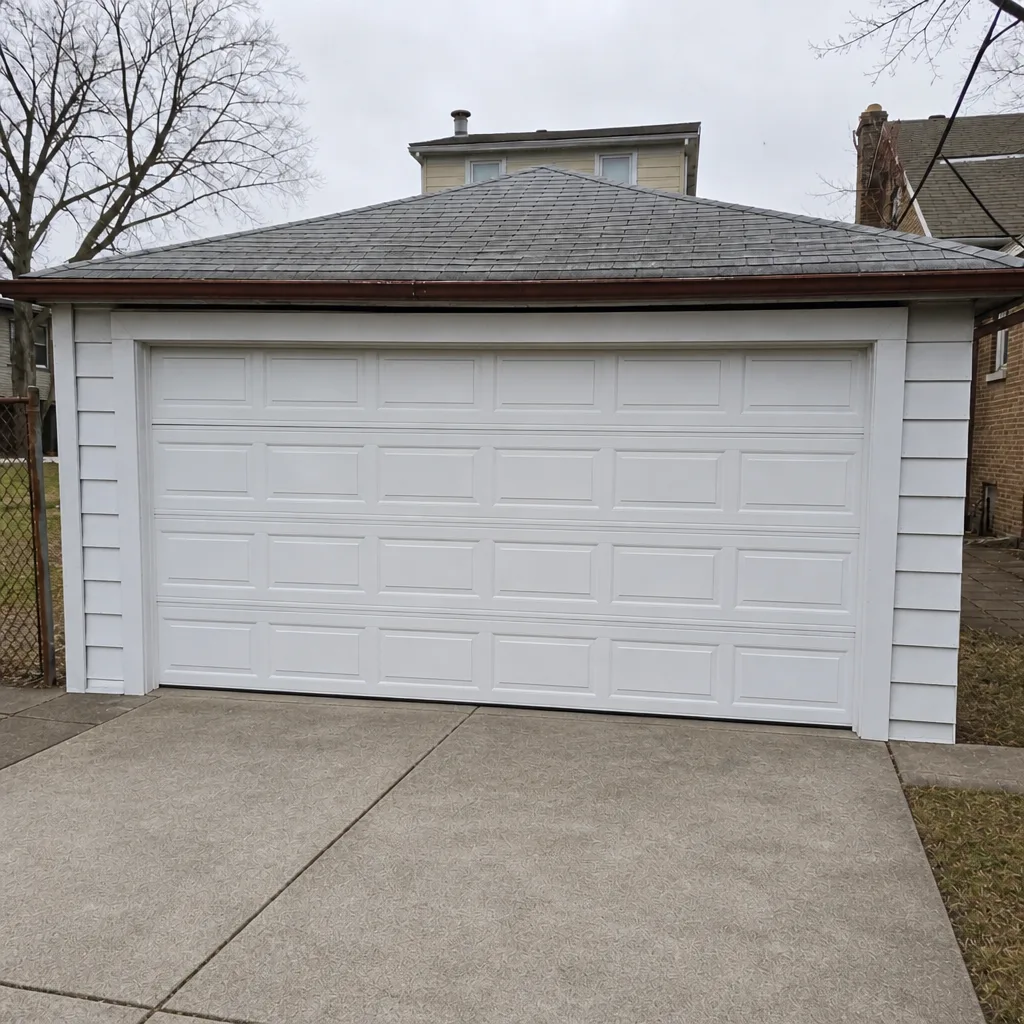
See the difference
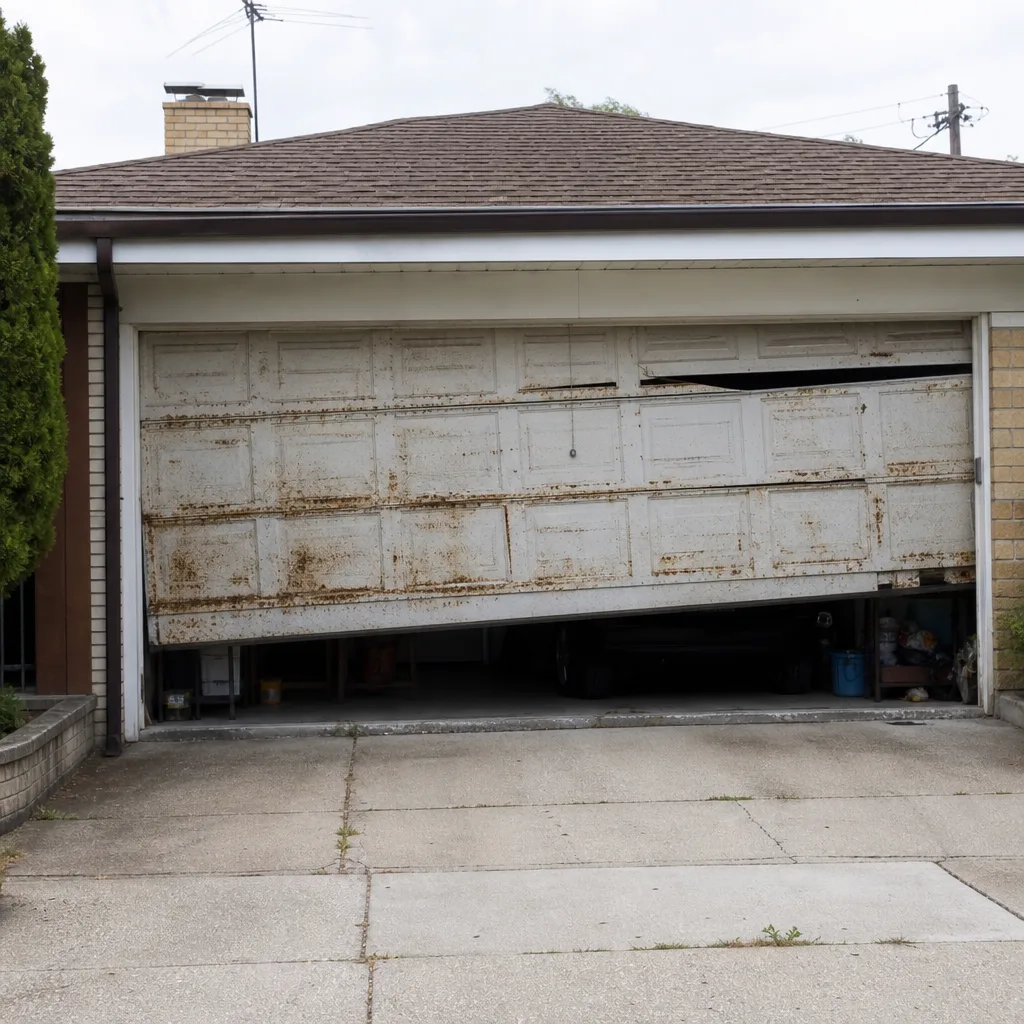 Before
 After
 Before
 After
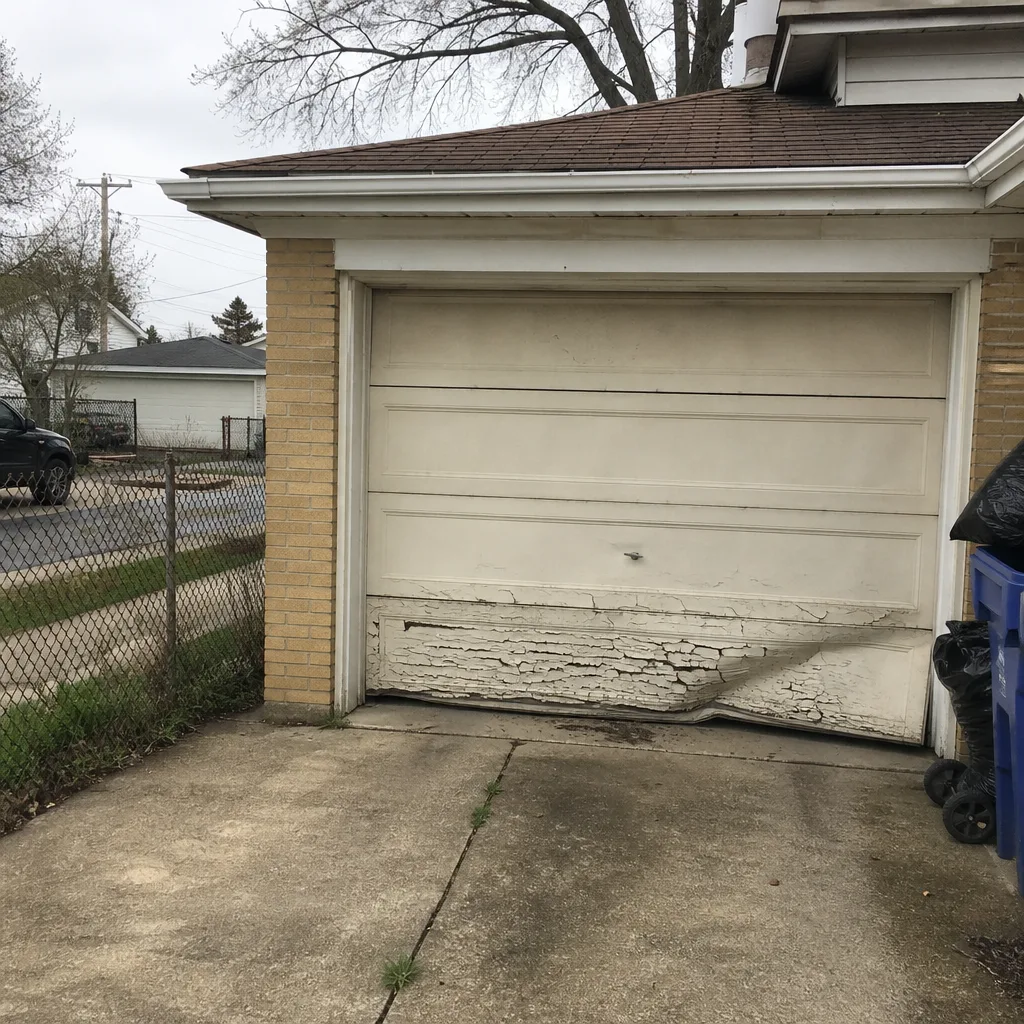 Before
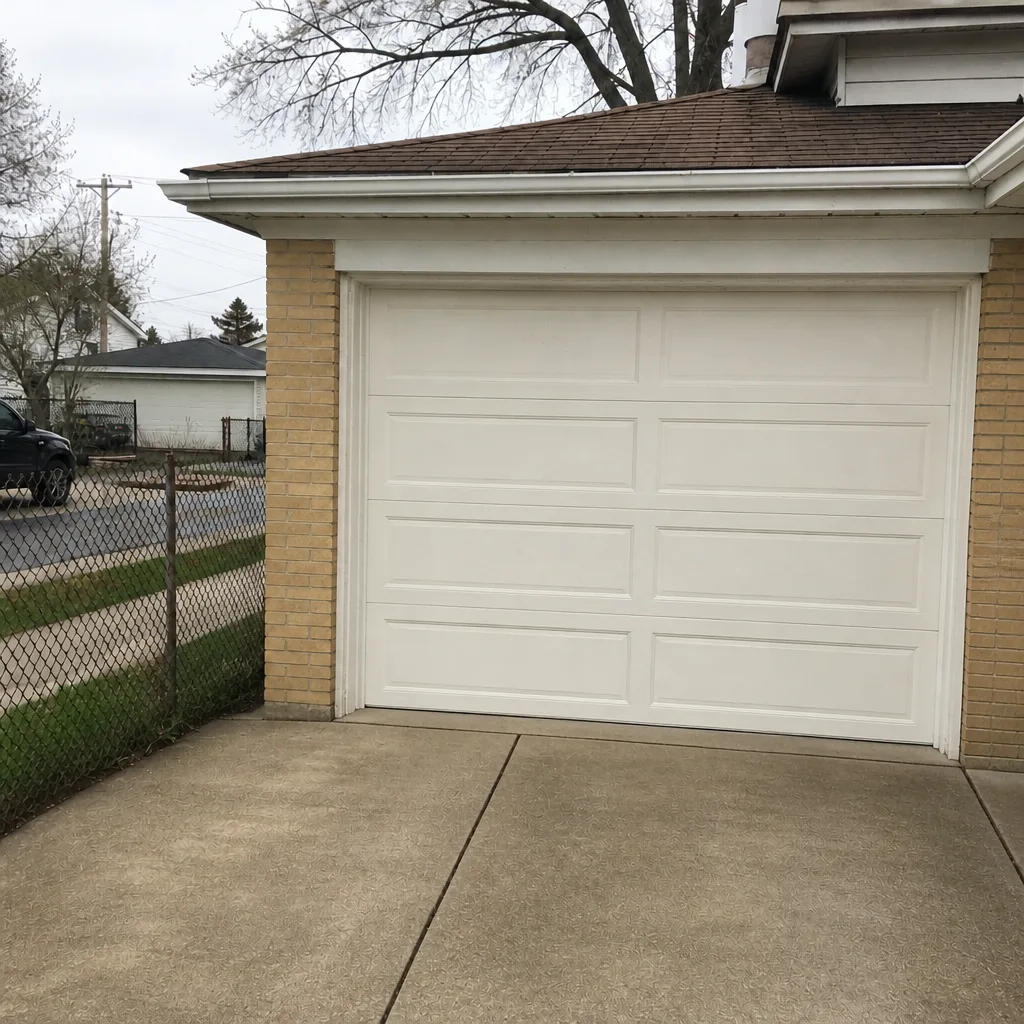 After
When to Call a Professional
Call a professional the moment any of these is true: the door won’t open or close reliably, the door opens partway and stops, the opener runs but the door doesn’t move, the door is visibly crooked, there’s a grinding sound during travel, the bottom seal is torn or missing, or you notice any visible damage to a spring or cable. Any of those conditions is a sign to stop operating the door and get it looked at. Spring and cable problems in particular can worsen suddenly; the parts are cheap to replace and expensive to ignore. Garage Door Repair Portage Park offers free estimates in Portage Park – call (844) 743-1041. Our technicians have up to 12 years of experience and handle the full system: springs, opener, panels, tracks, and hardware. The local pro is licensed and insured as their state requires, and pricing is quoted in writing before any work begins.
Frequently Asked Questions
Spring repair in Portage Park is typically quoted per spring, and because springs are often replaced as a matched pair, expect the pair to cost about twice a single spring. The exact range depends on the spring type, wire gauge, and door weight, so the written estimate sets the final price. Call (844) 743-1041 for an exact quote – estimates are free.
Yes – a door stuck open or closed is the kind of call we prioritize, and we aim for same-day service on repair calls. Call (844) 743-1041 as soon as you notice the problem and we’ll book you for the earliest available slot. Note that installation and replacement work is measured and scheduled rather than same-day.
No – the written quote you agree to before any work starts is the price you pay. If we find something we didn’t anticipate, we’ll show you and agree on the change before we touch anything. That’s the whole point of a written estimate.
Look above the door: a torsion spring is a horizontal coil wrapped around a shaft mounted on the wall above the door. Extension springs stretch alongside the horizontal tracks instead. If you’re not sure, our technicians can tell you on sight – and if you have extension springs without safety cables threaded through them, that’s worth upgrading.
Often yes. Alley access means narrower openings, lower headroom, and shorter backroom than a suburban garage. That can call for a low-clearance torsion setup or a high-lift track instead of the standard configuration. A proper measure before ordering is the only way to guarantee the door fits, which is why our installation service starts with the opening, not the panel.
We work on LiftMaster, Chamberlain, Genie, Clopay, Amarr, Wayne Dalton, Craftsman, and Raynor – eight of the leading brands that dominate Portage Park installs. If you’re not sure what brand you have, call (844) 743-1041 and we’ll walk you through finding the model plate.
The Bottom Line
A garage door in Portage Park is a small mechanical system living in a climate that tests every part of it. Knowing the six components – springs, cables, rollers, tracks, seals, and opener – lets you recognize which one is failing and ask for the right repair instead of replacing a whole door. Chicago’s freeze-thaw cycles wear galvanized hardware faster than most regions, so the parts that hold up here are the ones that resist repeated wet-dry cycling. The five-point inspection takes ten minutes and tells you most of what a technician will look at on a first visit. Spring repair is the one job that always belongs to a trained professional. And the two decisions that matter – repair versus replace, and which brand is on your door – both start with a proper measure and a written estimate. If any of that leaves a question, call (844) 743-1041 for a free estimate.
Written by the team at Garage Door Repair Portage Park.