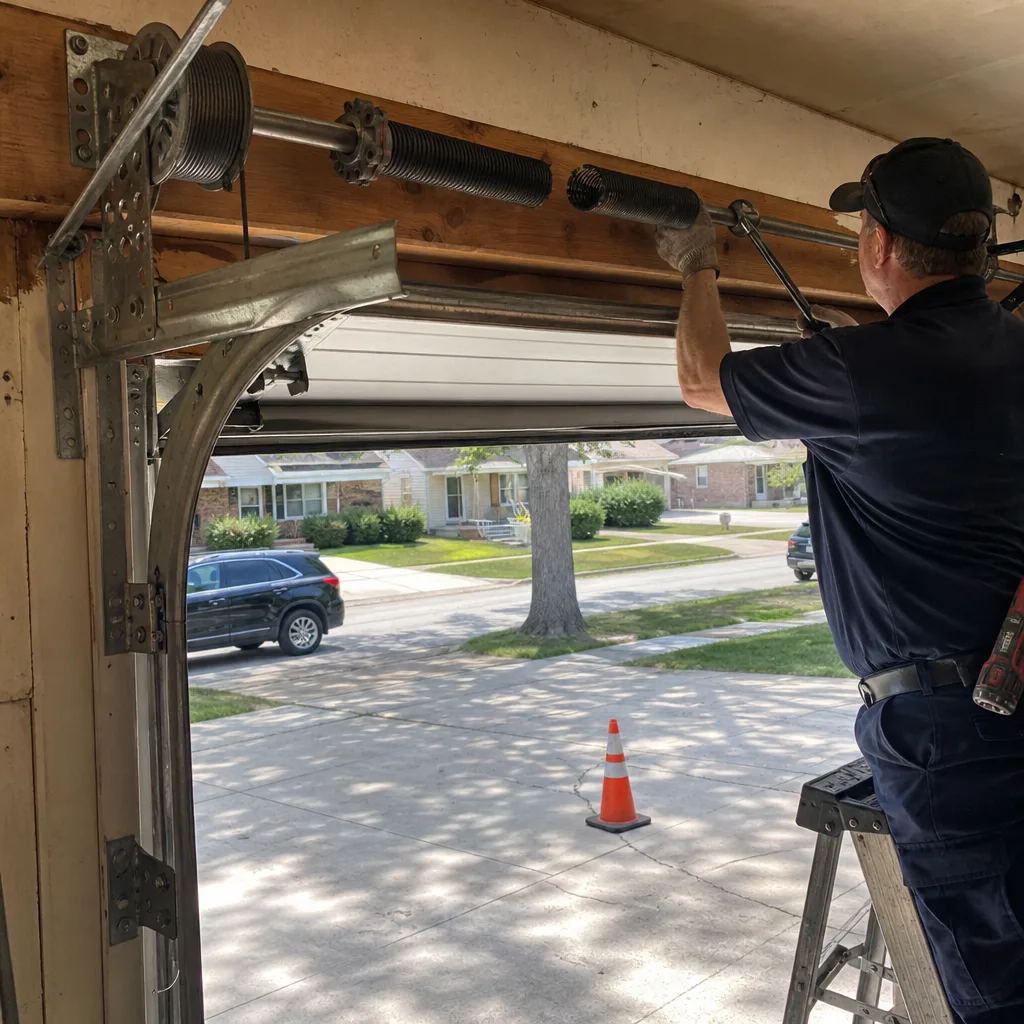
Last updated November 21, 2026
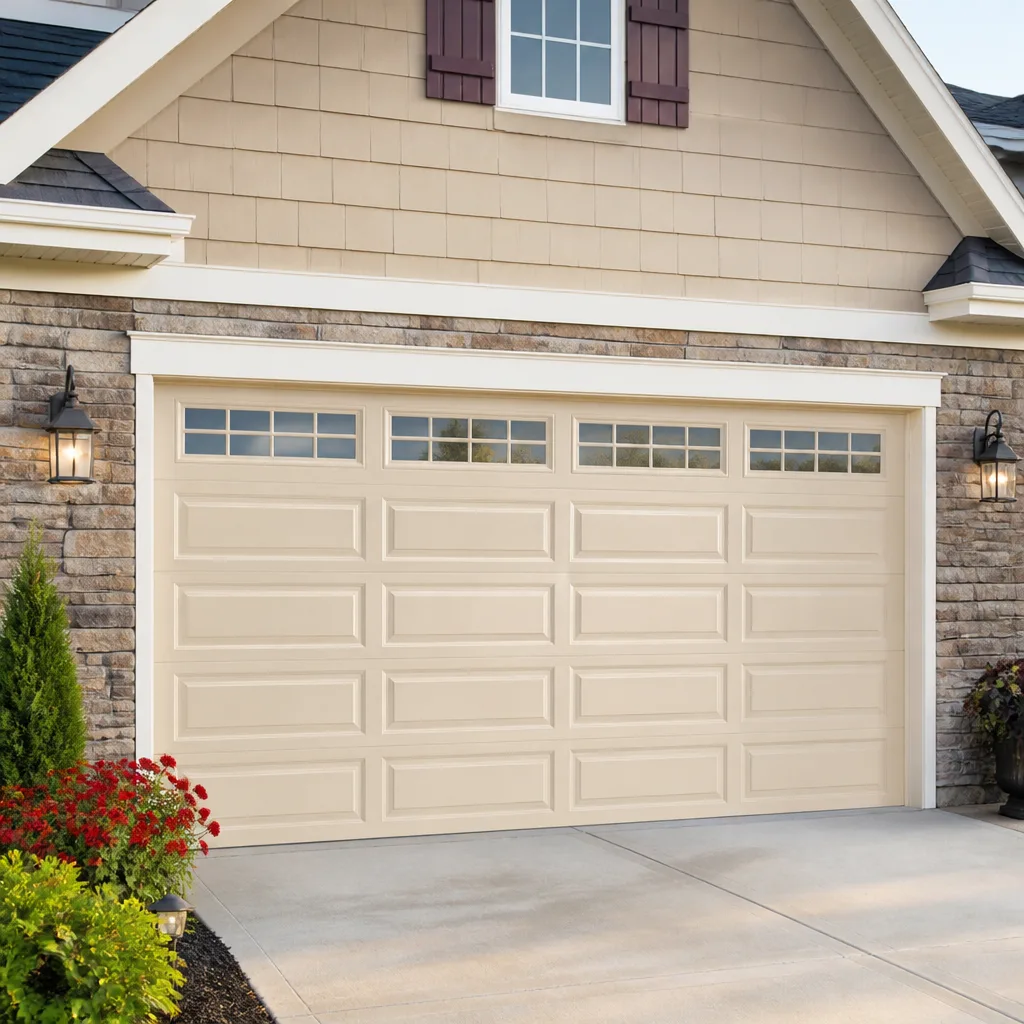 Raised-panel steel
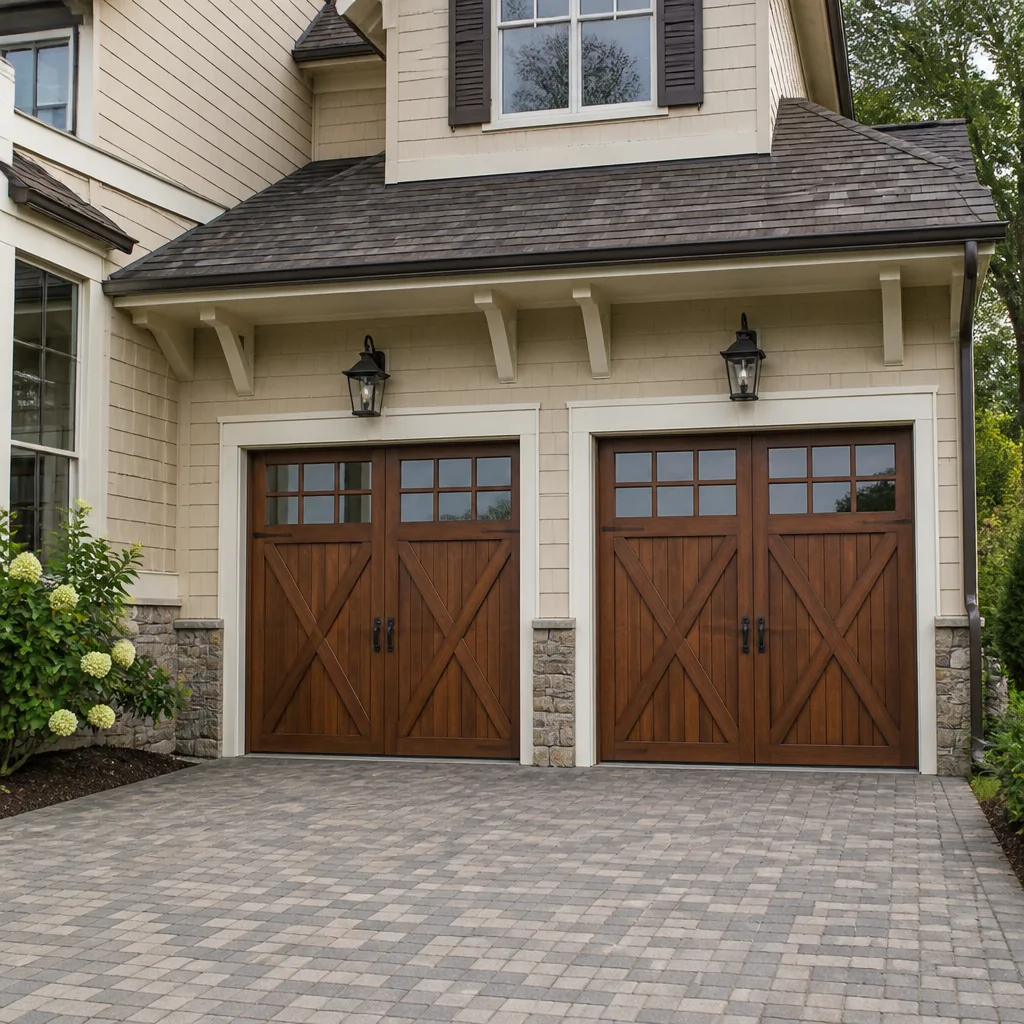 Carriage house
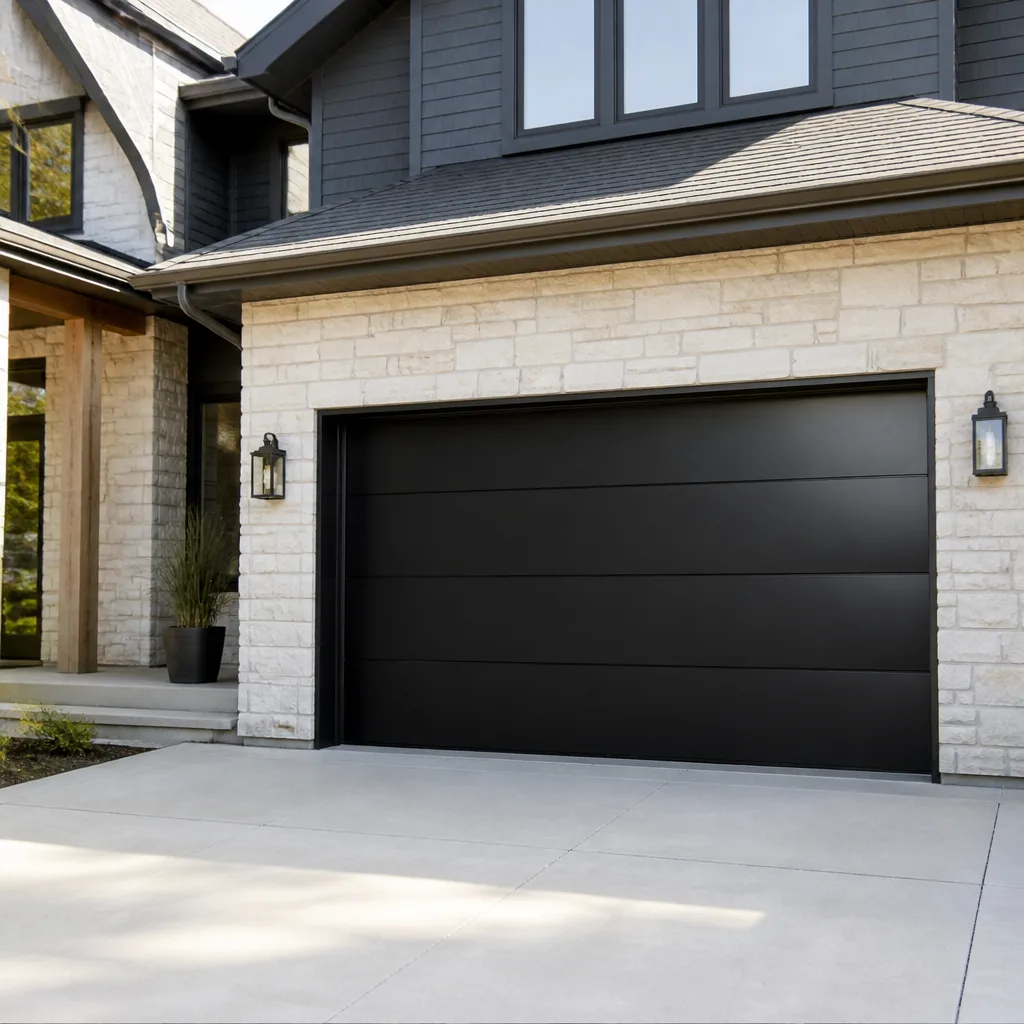 Modern flush
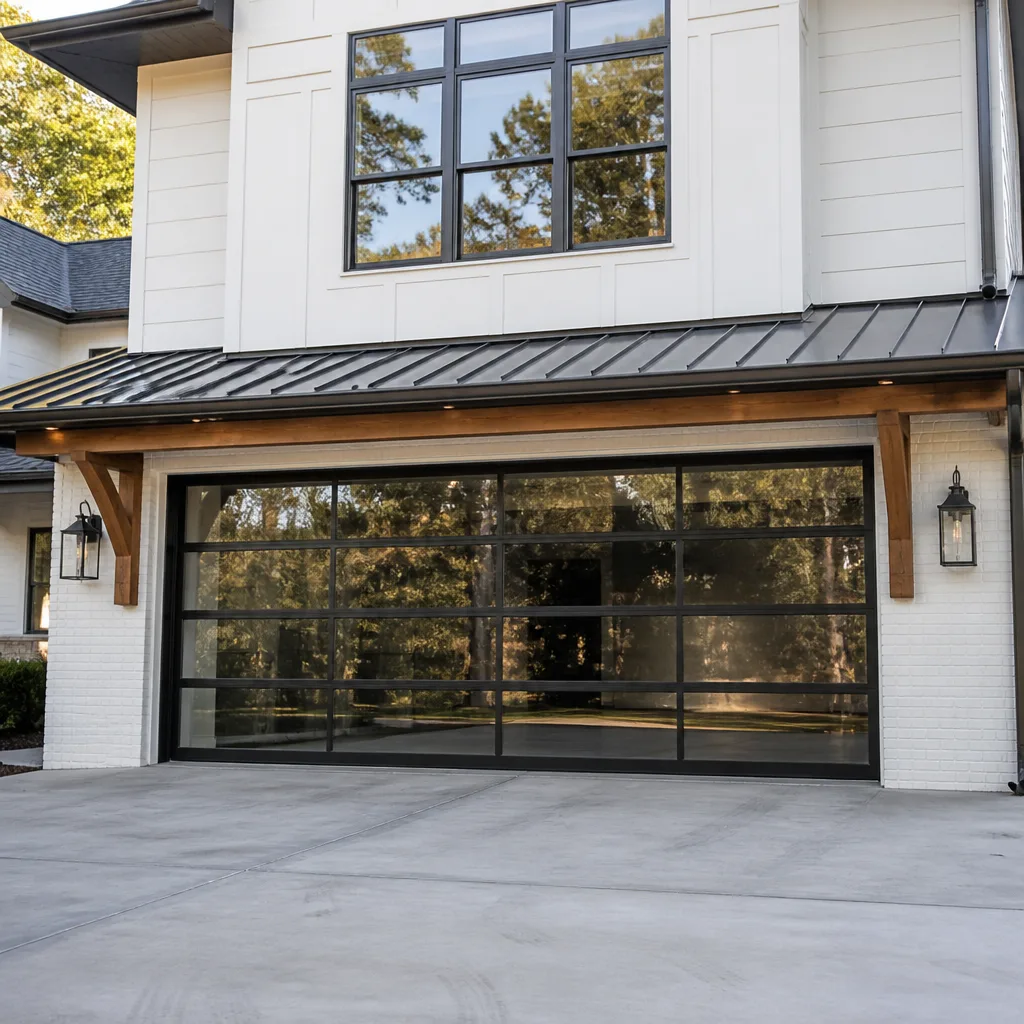 Full-view glass
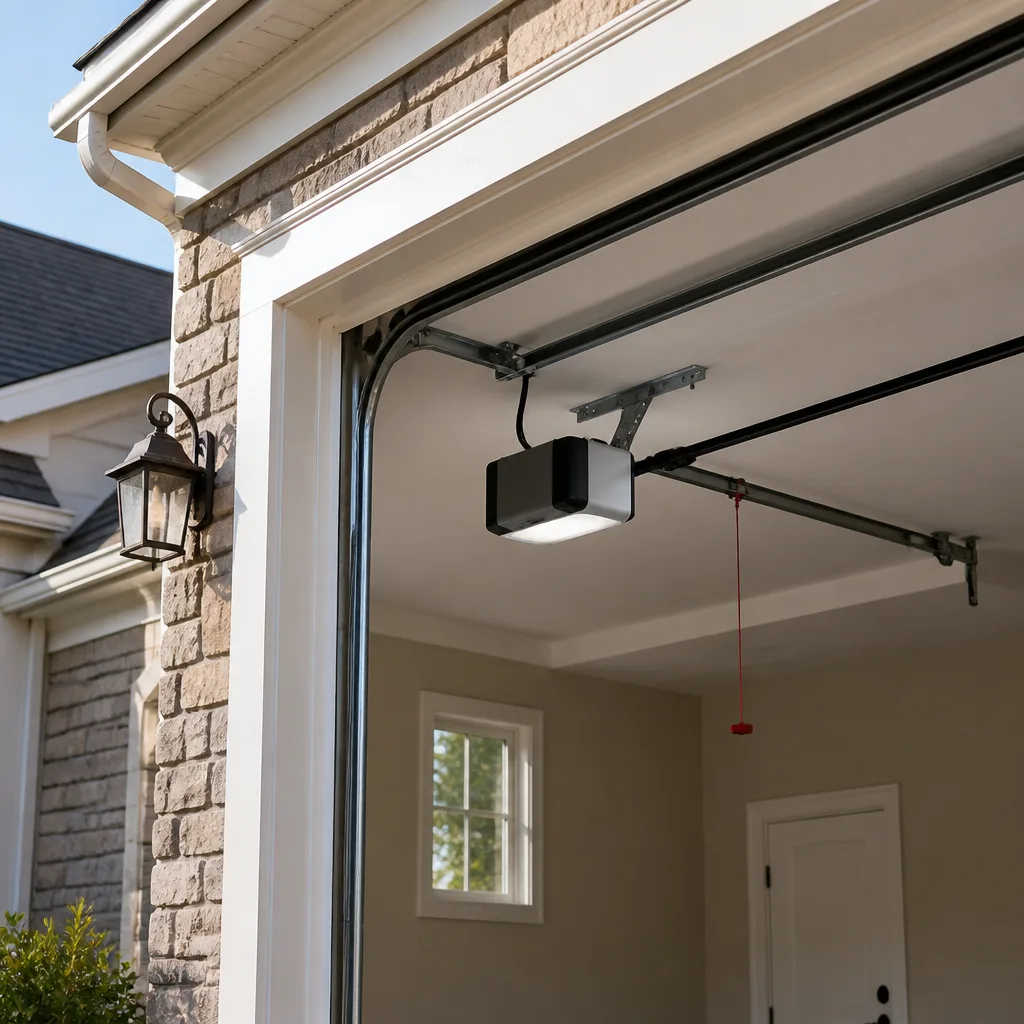 LiftMaster openers
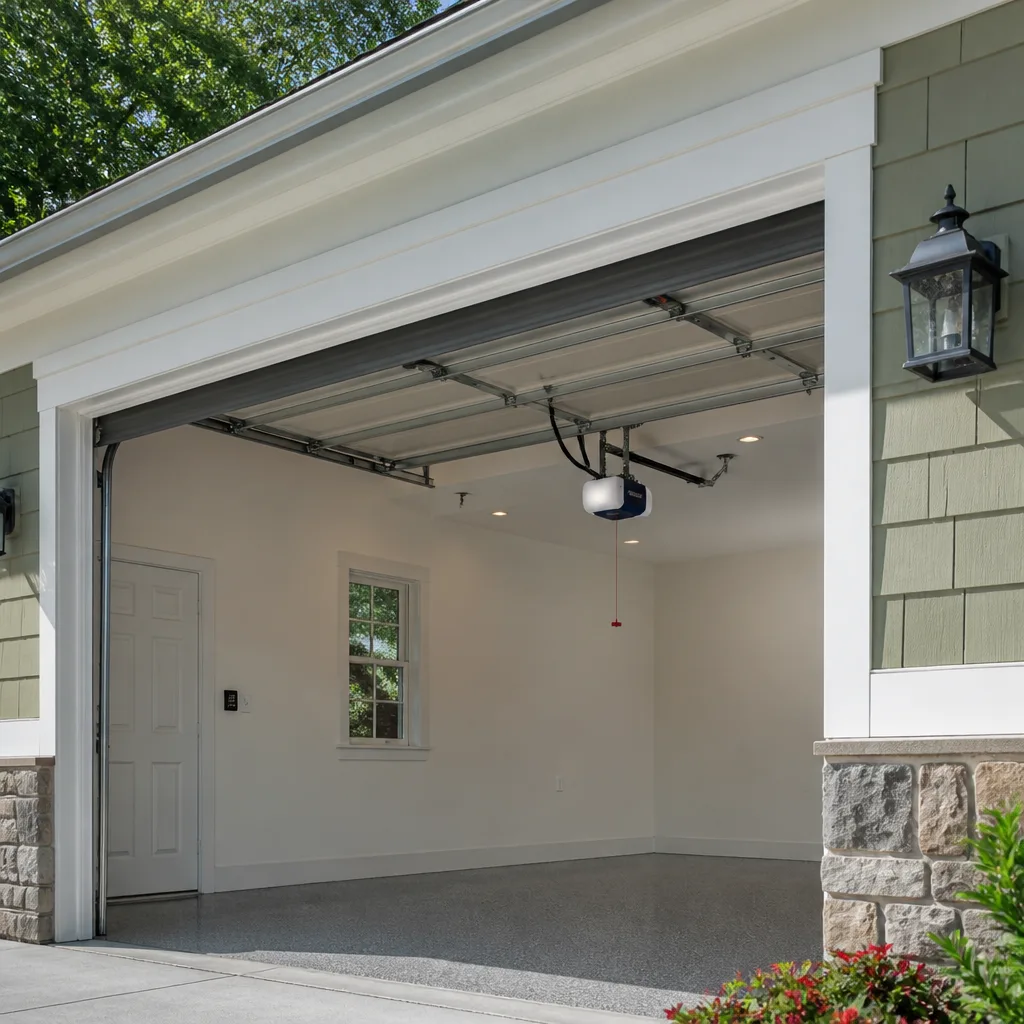 Chamberlain openers
Full 25-point door and opener safety check with every visit - springs, cables, rollers, tracks, and your LiftMaster or Chamberlain opener included
You get a price before we start. It does not change when the pro arrives.
Get your free estimateDIY vs Professional Garage Door: The Portage Park Homeowner’s Decision Guide
A wound torsion spring on a double door stores roughly 100 foot-pounds of torque. That number is the whole argument. It’s why the DIY-versus-professional question for garage doors isn’t really about confidence, or YouTube tutorials, or how handy you are on a ladder. It’s about which jobs have failure modes you can live with and which ones can put a hand through a surgeon’s schedule. Below we draw a hard, component-by-component line: what a capable Portage Park homeowner can safely handle on a free afternoon, what absolutely requires a trained technician, and the money math on both sides of that line.
Quick Answer
Safe DIY garage door work is limited to weatherseal, roller replacement, lubrication, and safety-sensor alignment. Everything that holds the door’s weight under tension – torsion springs, extension springs, lift cables, and track straightening under load – is professional-only work because the stored energy can cause serious injury. In Portage Park, a botched DIY attempt on those components typically adds $200-$400 to the eventual repair bill, which is more than the professional job would have cost to begin with.
Styles & brands we work with
- Raised-panel steel
- Carriage house
- Modern flush
- Full-view glass
- LiftMaster openers
- Chamberlain openers
Table of Contents
- Which garage door tasks are safe to DIY and which aren’t?
- What tools and knowledge actually separate a safe DIY repair from a dangerous one?
- Why are torsion springs the line you don’t cross?
- How do you do the DIY-safe jobs correctly?
- When does DIY actually save money in Portage Park?
- What does DIY work on an attached Portage Park garage mean for insurance and liability?
- How does the Chicago climate affect which jobs you can put off?
- When should you call a professional?
Which garage door tasks are safe to DIY and which aren’t?
Here’s the clean split. If the part moves the door or holds its weight, it’s professional work. If the part seals the door, smooths its travel, or tells the opener to reverse, a careful homeowner can handle it.
Safe for a capable homeowner
- Weatherseal replacement – the rubber flap along the bottom and the strips around the frame. No stored tension, no load, no real risk.
- Roller replacement – with the door fully open and the opener disconnected, rollers slide out of their brackets by hand.
- Lubrication – a garage-rated lubricant on hinges, rollers, and the opener rail at the manufacturer’s interval.
- Safety-sensor alignment – the two photo-eye sensors near the floor. Most no-reverse complaints trace back to a knocked sensor or a cobweb across the lens.
- Visual inspection – checking for frayed cables, worn rollers, and loose hinge bolts is always safe and worth doing monthly.
Professional-only
- Torsion spring replacement or adjustment – stored energy measured in hundreds of foot-pounds.
- Extension spring replacement – less energy than torsion, still enough to cause serious injury.
- Lift cable replacement – the cables are under the same tension as the springs and can whip when they fail.
- Track realignment under load – a twisted track holding door weight can drop it.
- Opener motor and gear replacement – electric, overhead, and not a job for a step stool.
Notice how short the professional-only list is. For most Portage Park bungalow and two-flat garages, the parts that fail on a monthly basis are on the safe side of the line. The parts that fail dramatically are on the other side.
What tools and knowledge actually separate a safe DIY repair from a dangerous one?
The tools aren’t the hard part. The hard part is knowing which parts of your door are preloaded with energy and which aren’t. Most failed DIY repairs we see started with a homeowner who owned the right wrench and didn’t know which bolt held a spring under tension.
For the genuinely safe jobs, here’s what you actually need on hand:
- A 6-foot step ladder for weatherseal and roller work; never a chair or a bucket.
- A socket set or nut driver matching your door’s hinge and roller bracket sizes (usually 7/16 or 1/2 inch).
- Garage door lubricant – not WD-40, which attracts grit. A lithium or silicone spray designed for doors.
- A door-rated sealant for the frame strips, if the old one is crumbling.
- Manufacturer’s manual – the roller and hinge part numbers vary by brand, and a door that fits Clopay hardware may not accept the same roller set as an Amarr or a Wayne Dalton.
What you don’t need – and should never have in your tool pile for a garage door – is a winding bar, unless a trained technician is using it. Those bars are made for one purpose, and if you don’t already know how to use them safely, you shouldn’t own a set. Our technicians have up to 12 years of experience on this exact tooling, and that’s a fair bar for who should touch a torsion spring.
Knowledge requirements are the other half. Before any DIY work, you should be able to answer three questions about your door: what kind of springs it uses (torsion, mounted above the door; extension, mounted side-to-side), what brand and model the door and opener are, and whether the opener has a battery backup. If you can’t answer those with certainty, you need a trained pair of hands. That’s not a sales pitch – it’s the actual prerequisite.
Why are torsion springs the line you don’t cross?
Torsion springs don’t fail like a hinge or a roller. They fail like a stretched rubber band that finally slips off a finger. When a torsion spring snaps, the door weighs 150-300 pounds and it has no counterbalance – it comes down on whatever is beneath it, and the spring itself can whip against the shaft and wall. When a technician adjusts one, the winding bar is under enough torque that a preventable slip can break a wrist or worse.
This is why spring work is dedicated safety work, not an add-on. At Garage Door Repair Portage Park, spring repair gets its own service category because it’s the most dangerous and the most common breakdown on a residential door.
Some signs a spring is failing, all of which mean stop using the door and call us:
- A loud bang from the garage, often weeks before anything visibly changes.
- A visible gap in the coiled spring when the door is closed.
- The door feels unusually heavy when you lift it by hand.
- The opener strains, stops halfway, or the door droops on one side.
- Two or more of the above, together – that’s a nearly certain spring failure.
If any of those match, don’t try to lift the door manually to “test it.” Don’t ask a neighbor with a wrench. And don’t treat a snapped spring as a weekend project. Call (844) 743-1041 and we’ll get eyes on it. Spring repairs are the one category where fast action genuinely prevents a bigger, more expensive, or dangerous outcome. The full run of Garage Door Repair Portage Park services covers spring work as its own dedicated service for exactly this reason.
How do you do the DIY-safe jobs correctly?
Weatherseal replacement in eight steps
- Close the door, disconnect the opener, and cut power at the wall switch – no DIY job on a garage door starts with an energized opener.
- Check the bottom rubber seal; if it’s cracking, stiff, or daylight shows underneath when the door is down, it’s due.
- Pull the old seal out of its channel or unscrew the retainer depending on the profile (some doors use a slide-in T-seal, others a bolt-on retainer).
- Clean the channel with a dry cloth. Grit in the channel is why new seals pull loose.
- Measure the door width and cut the new seal a half-inch long so it compresses rather than shrinks in the cold.
- Slide or bolt the new seal into the channel; don’t overtighten bolts or you’ll pucker the rubber.
- If the door has side and top seals, replace those too – they’re what keep wind-driven rain and snow off the hinges.
- Reconnect the opener, restore power, and run the door through a full open-close cycle to confirm the seal doesn’t drag on the floor.
Safety-sensor realignment in five steps
- Locate both sensors at the bottom of each track, about six inches above the floor.
- Check that neither is blocked by a box, a trash bag, a snow shovel, or a bike wheel; the door won’t close if they see an obstruction.
- Confirm each sensor’s LED is lit steadily. A blinking or dark LED means an alignment or wiring problem.
- Loosen the wing nut on the sensor bracket and swivel it slowly until both LEDs sit steady and face each other directly.
- Retighten the nut, then press the wall control and confirm the door reverses when you wave a hand through the beam.
That’s the whole safe-DIY toolkit. Weatherseal and sensors are the two repairs most worth doing yourself in Portage Park, because a bottom seal that fails in January lets meltwater onto a concrete floor, and a misaligned sensor strands the whole house on a Sunday morning.
When does DIY actually save money in Portage Park?
Weatherseal is the clearest win. A bottom seal kit is an inexpensive part and about an hour of your time, versus paying for the callout. Sensor alignment is the second – a five-minute fix that costs nothing if you do it yourself and a service visit if you don’t. Roller replacement is a middle case: worth doing yourself if you’re comfortable on a step ladder and the door isn’t heavy; worth a call if the door already feels like it’s straining, because that usually means the rollers are the smaller problem.
Here’s where DIY stops paying. Our experience in Portage Park, and the reason a “cheap” garage door repair so often turns into an expensive one, is that the good-intention DIY attempt on a spring or cable tends to create a second problem before it solves the first.
- Bent the torsion shaft trying to remove a spring: the whole assembly gets replaced, not one spring.
- Kinked a lift cable: that’s a paired replacement plus the spring that has to come off to reach it.
- Twisted a track while trying to straighten it under load: the door has to be taken down and rehung.
On a typical Portage Park repair, a botched attempt at one of those jobs adds $200-$400 to the final bill over what the professional repair would have cost from the start. That $200-$400 is the number to hold in your head: it’s the cost of doing it wrong first.
The decision rule is simple. If the part is a seal, a roller, or a sensor, DIY is fine. If the part is holding weight or under tension, professional work is the cheaper option, even before you count the injury risk. For the whole-door repairs that do fall to us, garage door repair covers all five service categories so you aren’t hunting a second contractor.
What does DIY work on an attached Portage Park garage mean for insurance and liability?
The short answer: possible coverage problems, and you should ask your insurer before you touch anything structural. We can’t see your policy, but we can tell you what homeowners ask about most, and what a claims adjuster tends to look at.
Portage Park is a neighborhood of predominantly attached garages and garages sharing a wall with the house. That layout is what makes the insurance question matter. If a DIY error on a spring, cable, or track drops the door onto a car, a bicycle, or a person, or damages the shared wall, the first question is whether the damage was caused by a professional-service item done by a non-professional.
What we tell every homeowner who asks:
- Read your garage door’s warranty before any DIY adjustment. Many manufacturers void coverage on the door’s structural components when unqualified work is performed – and that void can survive the eventual professional repair.
- Ask your agent directly whether DIY garage door work is excluded. Most policies have language about “faulty workmanship,” and it’s broad.
- Document what you did, with photos, if you did safe-side DIY work. It matters if a claim ever comes up.
- If the door shares a wall with the house, treat every structural decision as a home matter, not a garage matter.
One clear line we can give: spring, cable, and track work done by a trained technician is the kind of work that shows up as routine maintenance on a claim, not as an exclusion. Your insurer can confirm the specifics of your own policy. The point isn’t to scare you away from putting on a new bottom seal – it’s to know when you’re moving from home maintenance into structural work.
How does the Chicago climate affect which jobs you can put off?
Portage Park gets the full Chicago cycle: hard freezing winters, freeze-thaw ground movement every spring, hot and humid summers, and enough wind-driven rain to test any seal. That cycle changes the DIY timetable in ways a page written for a temperate climate won’t tell you.
Put weatherseal at the top of your list, and do it before the first hard freeze. A bottom seal that’s stiff in October will crack and let meltwater onto the concrete by January, and the concrete slab in a Portage Park garage is typically not the place you want persistent moisture to sit. Working on a seal in a drafty garage in January is miserable; doing it on a mild September afternoon is a half-hour.
Springs also get stressed by the seasonal temperature swing. A spring that’s near the end of its service life and just survived a cold winter is more likely to give out in the first warm weeks of spring, when the whole door flexes. That’s the seasonal pattern worth knowing, and it’s why we hear from more Portage Park homeowners in March and April than any other month. Cold-weather hardening and warm-weather flexing affect steel, rubber, and plastic seals differently, and the seals are the part of the system that takes the worst of it.
Lubrication is the DIY job the climate makes more valuable. Twice a year is the manufacturer’s usual recommendation, and in Portage Park, the second pass is worth doing in late fall – before the cold stiffens every hinge and roller on the door. Ten minutes with a garage-rated spray can save a service call in January.
The safe-DIY side of the list barely changes with the season. The professional-only side gets worse in winter, when a door that’s already failing has less room for error. If your door is showing one of the spring-failure signs from the earlier section, don’t wait for spring to call – cold weather is when a partial spring failure turns into a full one, and that’s when a repair becomes an emergency.
When should you call a professional?
Call us when the door is doing any of the following: making a loud bang when it opens or closes; sagging on one side; failing to stay open when lifted manually; stopping halfway through a cycle; or reversing back down after a photo-eye trip that you’ve already cleaned and cleared. All of those are signs the door’s balance or safety systems are compromised, and the safe-DIY list won’t fix any of them.
Also call us for the jobs you don’t want to do yourself even if they’re on the safe list: roller replacement if the door is heavy, weatherseal on a two-car door in a tight garage, or any job where the opener isn’t a brand you recognize. We handle all five of the core garage door services in Portage Park, including garage door opener repair on LiftMaster, Chamberlain, Genie, and Craftsman systems – the smart-home-connected brands most Portage Park garages now use – plus Clopay, Amarr, Wayne Dalton, and Raynor door work. Garage Door Repair Portage Park offers free estimates in Portage Park – call (844) 743-1041. Upfront pricing, quoted and agreed before any work begins, and the written estimate is the final price.
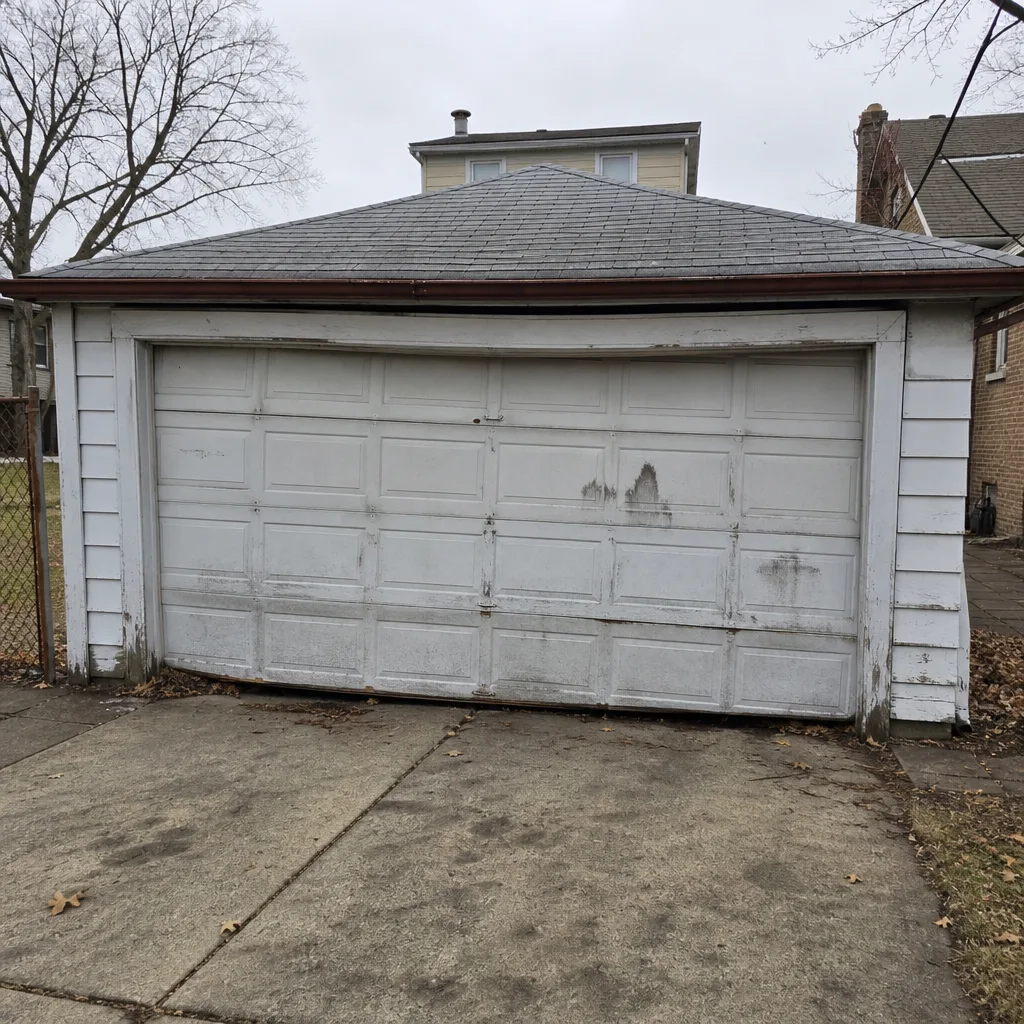
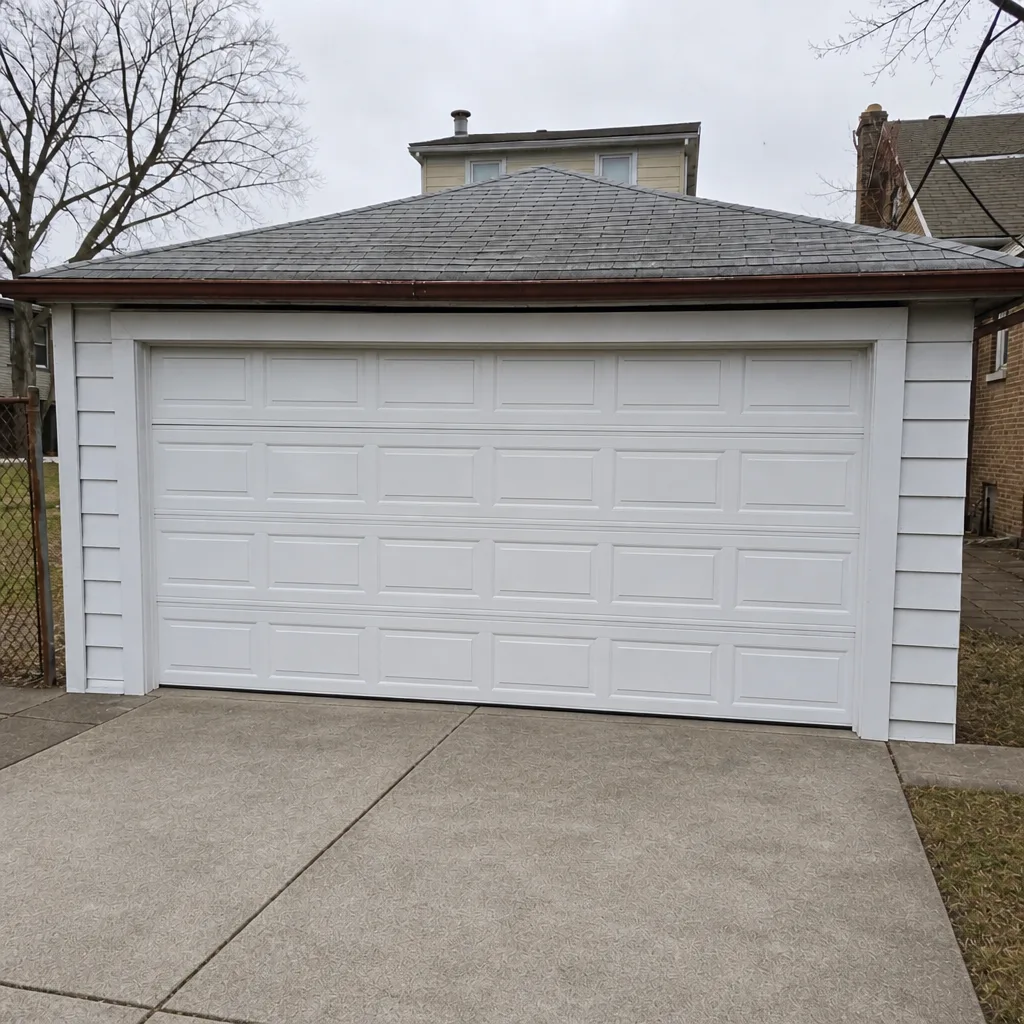
See the difference
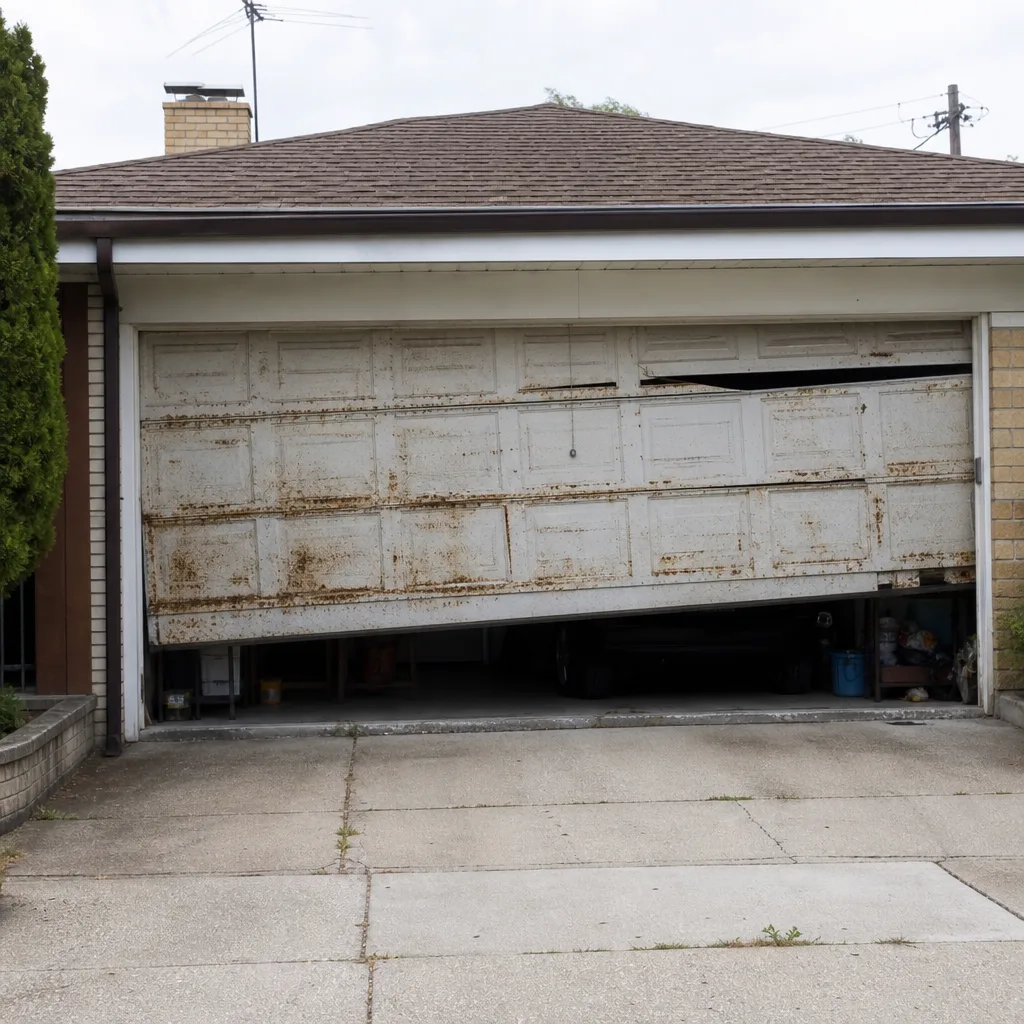 Before
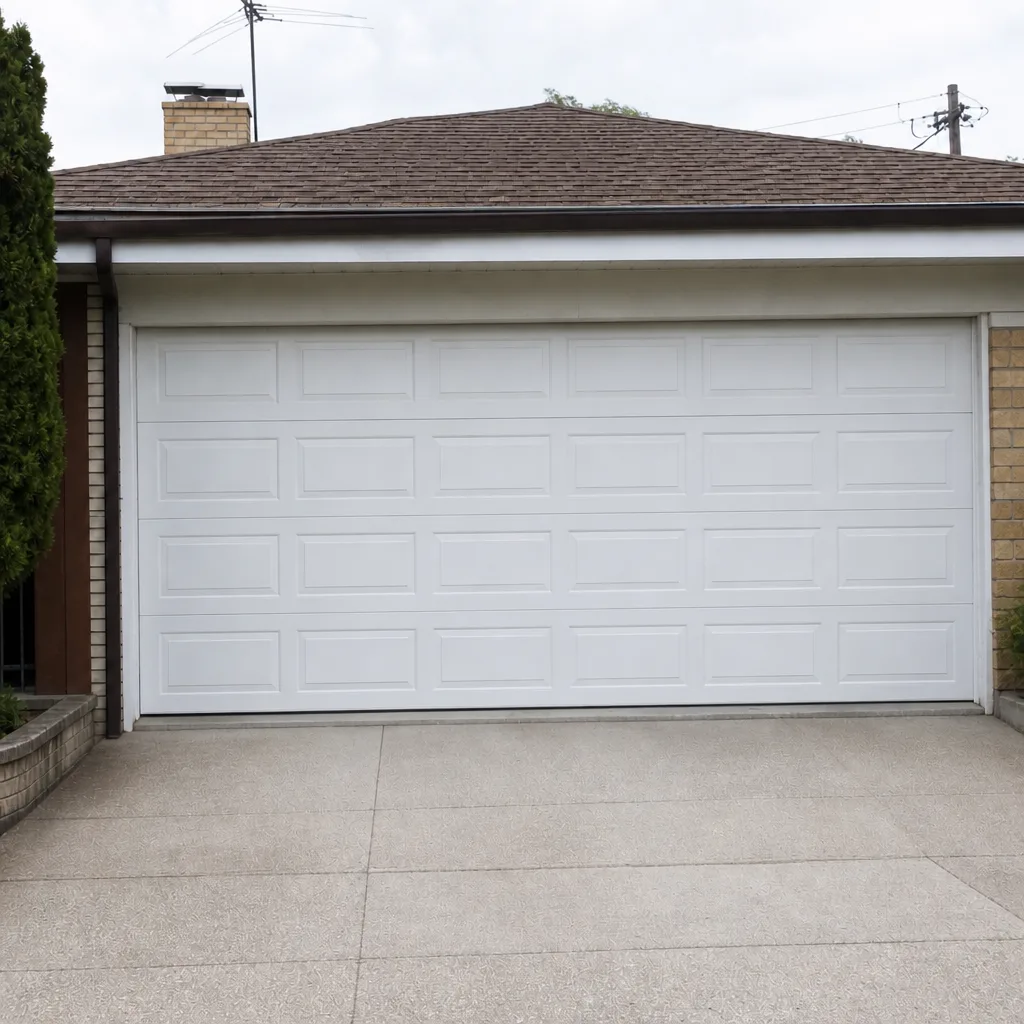 After
 Before
 After
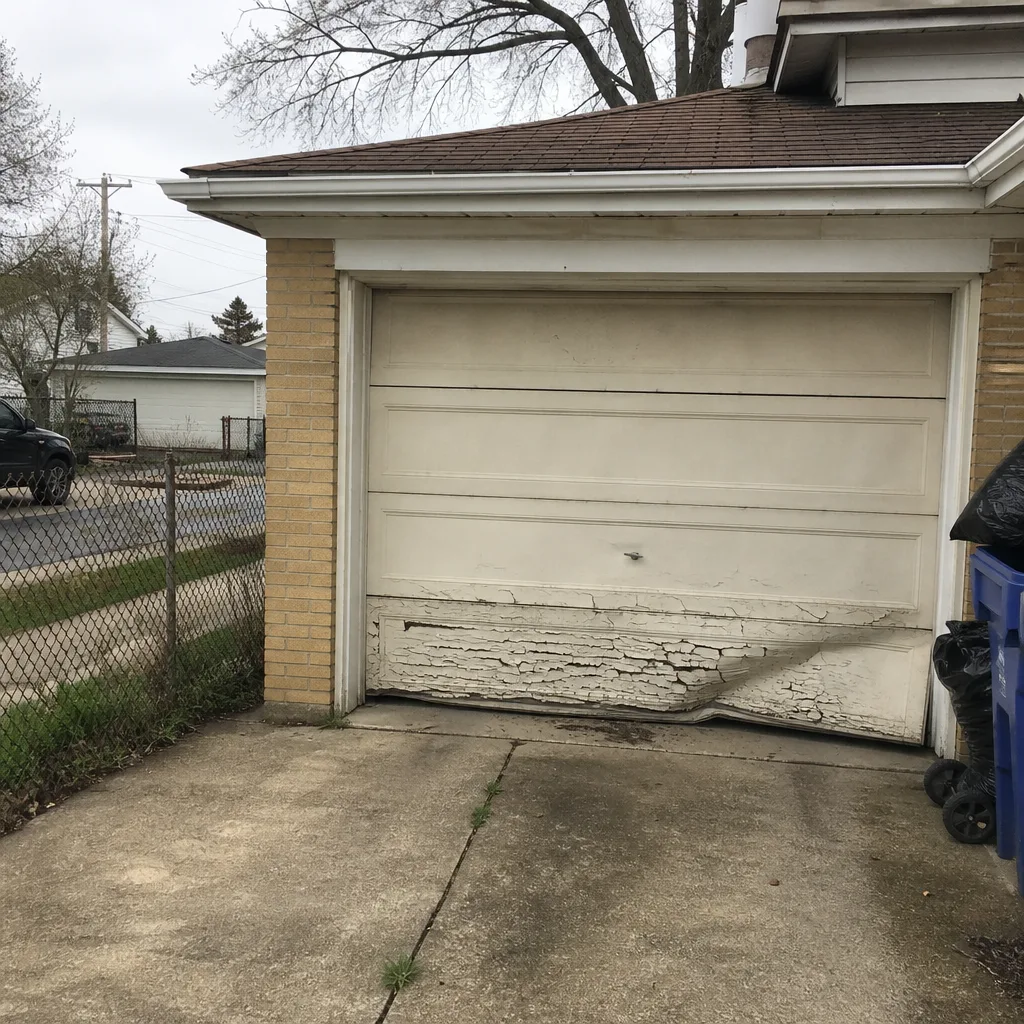 Before
 After
Common Mistakes to Avoid
- Trying to wind or unwind a torsion spring with two screwdrivers. The screwdriver trick from a video doesn’t work on a torsion spring, and a screwdriver isn’t a winding bar. A slip under tension is a hand injury, and most homeowners don’t realize that until the spring is halfway off.
- Testing a door that has a snapped spring by lifting it manually. A door without a working spring has no counterbalance and will drop. If you suspect the spring is gone, don’t touch the door – call us and we’ll come out.
- Buying a “universal” roller or bottom seal without checking the brand. Portage Park garages hold Clopay, Amarr, and Wayne Dalton doors that use different roller profiles and retainer styles. Measure, check the manual, then buy. A hardware store return trip is cheaper than a bent bracket.
- Ignoring a bent track because the door still opens. A bent track under load is a strain on the opener and the panel edges; it doesn’t get better with time. It gets worse, and it usually takes a panel with it.
- Assuming a garage door controller counts as “connected” without checking the opener’s model. Smart-home integration requires a compatible Chamberlain or Genie opener; older units need a bridge or a replacement. Know what you’re buying before you add the app.
- Disabling the safety sensors to “stop the nuisance trips.” That’s a code and safety problem, not a fix. The door will close on anything – a child, a pet, a bike. Realign or replace the sensor instead.
- Skipping the warranty check before DIY. Many warranties void structural coverage on unqualified work. That void outlasts the repair, so a small problem can now follow the door for years.
- Putting off a bottom seal replacement into deep winter. In Portage Park, that seal is what keeps snowmelt off the garage slab. A cracked seal in January lets water in and a frozen slab under the door is a bigger problem than the seal.
Frequently Asked Questions
No. Torsion and extension springs store enough energy to cause serious injury when they’re released improperly, and this is the single job we recommend against for any homeowner regardless of confidence level. Spring replacement should be done by a trained technician with a winding bar and door-specific knowledge. Call (844) 743-1041 for spring repair in Portage Park; estimates are free.
Weatherseal replacement, roller replacement, lubrication, safety-sensor alignment, and visual inspection are all safe DIY work for a careful homeowner. Anything holding the door’s weight or under tension – springs, cables, track work, opener motor swaps – belongs to a professional. If you’re unsure which category a repair falls into, that’s your cue to call.
Usually yes. A damaged torsion shaft, kinked cable, or twisted track from a DIY attempt typically adds $200-$400 to the eventual professional repair bill over what the original job would have cost. The parts often need to be replaced in pairs, and the door sometimes needs to be rehung. That’s the number to weigh against the cost of a service call.
For a same-for-same repair, most homeowners don’t need a permit, but track, spring, and opener replacements can touch code in some Chicago neighborhoods. Check with the City of Chicago Department of Buildings before structural work. For new door installation, that’s a separate conversation best had with your contractor and the city – we don’t guess on permits.
Most single-component repairs land in the low hundreds of dollars, and spring replacement is at the top of that range because it’s a two-spring job with matched parts. That’s a general range, not a quote – the written estimate sets the final price, and we quote it before any work begins. Call (844) 743-1041 for a free estimate on your specific door.
Often yes on the structural components. Many manufacturers void coverage when unqualified work is performed on springs, cables, tracks, or opener internals. The warranty void can outlast the repair itself, which is the long-term cost to weigh against the DIY savings. Ask your insurer, and check the door warranty card before you start.
In most cases yes for repair and emergency work – spring failures, cables, opener faults, and doors stuck in the open position. Call (844) 743-1041 and we’ll give you a real window, not a vague one. If your spring has already snapped, stop using the door and call us. We don’t offer Saturday service, but a door that fails on a Saturday can still call and we’ll book it for Sunday.
Repair first. A door with a failed spring, a worn opener, or a bent track is almost always cheaper to fix than to replace, and the structure is usually fine. Replacement makes sense when the panels are rotting, the door has been hit and rehung more than once, or you’re upgrading an older manual door. Our technicians have up to 12 years of experience; our whole approach is repair first, replace only when it makes sense. When a replacement is the right call, garage door installation is handled by the same technicians who would have repaired the door – no contractor hand-offs. Replacement work is measured, ordered, and scheduled, so we don’t promise same-day service on installs; we do promise a free measure and a written price.
The Bottom Line
The DIY line on a garage door is not about skill – it’s about which parts can hurt you. Weatherseal, rollers, lubrication, and sensor alignment are genuinely safe for a careful Portage Park homeowner. Springs, cables, and track work under load are not, and a botched attempt adds $200-$400 to the eventual bill. The professional call on that side is the cheaper option, before you count the injury risk or the warranty. If you’re uncertain which side of the line your job is on, call and ask; it’s a two-minute conversation. Our technicians work on Chamberlain, Genie, Clopay, Amarr, and other major brands, cover all five garage door services, and quote the price before any work starts.
Call (844) 743-1041 for a free estimate on your Portage Park garage door. Same-system, one-call coverage – springs, opener, panels, and parts together.
Written by the team at Garage Door Repair Portage Park.